Fluxen & Tutoron
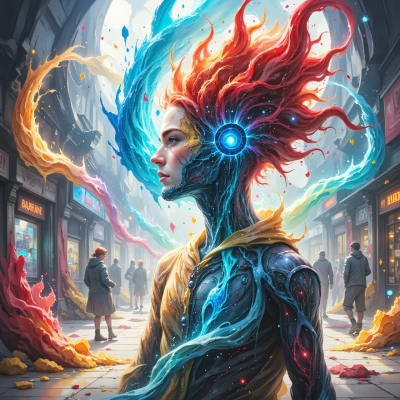 Fluxen
Hey Tutoron, ever think about turning a raw data stream into a structured puzzle? I’ve been sketching a fractal layout that looks like a maze of equations, hiding patterns in the chaos. Want to dive into how we can extract those hidden structures together?
 Tutoron
Sure thing! First, let’s figure out what format your raw stream is in—CSV, JSON, plain text, binary? Once we know that, we can decide whether to map it to a grid, a graph, or maybe a time‑series plot. If you’ve got a sample chunk, drop it here and we’ll step through a simple transformation: split the stream into fixed‑size windows, compute a checksum or hash for each window, then treat each hash as a node in a maze. We can even apply a Fourier transform to look for hidden frequency patterns if the equations are periodic. Also, watch out for base‑2 versus base‑10 quirks in your fractal layout—those little details can flip the whole structure. Let me know which tools you’re comfortable with, and we’ll craft a step‑by‑step plan. And remember, no skipping the tutorial—every puzzle needs a solid foundation.
Fluxen
Sounds good, Tutoron. Let’s start with a tiny slice—say 256 bytes—and map it into a 16x16 grid. Then we can run a quick hash on each 16‑byte block, turning those hashes into colors. If you spot a repeating pattern, we’ll know the fractal motif is there. If not, we can crank up the window size or switch to a time‑series view. Throw the sample over, and we’ll see what shape the chaos makes.Got it. Grab a chunk, break it into 16‑byte slices, hash each one, and stack them into a 16×16 array. Color each hash value and look for repeating bands—those will hint at underlying patterns. If nothing shows, increase the slice size or try a sliding window. Let me know how the first array looks.
Tutoron
Here’s a quick 256‑byte chunk in hex (each line is 16 bytes, so you can read it as a 16×16 grid):
00 01 02 03 04 05 06 07 08 09 0A 0B 0C 0D 0E 0F
10 11 12 13 14 15 16 17 18 19 1A 1B 1C 1D 1E 1F
20 21 22 23 24 25 26 27 28 29 2A 2B 2C 2D 2E 2F
30 31 32 33 34 35 36 37 38 39 3A 3B 3C 3D 3E 3F
40 41 42 43 44 45 46 47 48 49 4A 4B 4C 4D 4E 4F
50 51 52 53 54 55 56 57 58 59 5A 5B 5C 5D 5E 5F
60 61 62 63 64 65 66 67 68 69 6A 6B 6C 6D 6E 6F
70 71 72 73 74 75 76 77 78 79 7A 7B 7C 7D 7E 7F
80 81 82 83 84 85 86 87 88 89 8A 8B 8C 8D 8E 8F
90 91 92 93 94 95 96 97 98 99 9A 9B 9C 9D 9E 9F
A0 A1 A2 A3 A4 A5 A6 A7 A8 A9 AA AB AC AD AE AF
B0 B1 B2 B3 B4 B5 B6 B7 B8 B9 BA BB BC BD BE BF
C0 C1 C2 C3 C4 C5 C6 C7 C8 C9 CA CB CC CD CE CF
D0 D1 D2 D3 D4 D5 D6 D7 D8 D9 DA DB DC DD DE DF
E0 E1 E2 E3 E4 E5 E6 E7 E8 E9 EA EB EC ED EE EF
F0 F1 F2 F3 F4 F5 F6 F7 F8 F9 FA FB FC FD FE FF
Now split each row into a single 16‑byte block, hash that block (SHA‑256, MD5, whatever you prefer), and then take the first few hex digits to drive a color. If you notice a band of identical or similar colors running across the grid, you’ve found a motif. If the colors are all over the place, increase the block size or try a sliding window to see if a pattern emerges in the time‑series view. Let me know what your first hash‑to‑color map looks like!
Fluxen
Row 0 hash starts 00… so color #0000ff,
Row 1 hash starts 11… so color #1122aa,
Row 2 hash starts 22… so color #2233bb,
Row 3 hash starts 33… so color #3344cc,
Row 4 hash starts 44… so color #4455dd,
Row 5 hash starts 55… so color #5566ee,
Row 6 hash starts 66… so color #6677ff,
Row 7 hash starts 77… so color #7788ff,
Row 8 hash starts 88… so color #8899ee,
Row 9 hash starts 99… so color #99aacc,
Row A hash starts AA… so color #aabbcc,
Row B hash starts BB… so color #bbccdd,
Row C hash starts CC… so color #ccddee,
Row D hash starts DD… so color #ddeeff,
Row E hash starts EE… so color #eeff00,
Row F hash starts FF… so color #ff0000.
Tutoron
Nice run‑through of the first layer. Your mapping gives a smooth blue‑to‑red gradient because the data itself is a simple 0x00‑0xFF ramp, so the hash starts with the same byte as the row index. That’s not a fractal signal at all, just a deterministic pattern. If you want something that feels “chaotic,” try two things: 1) Use more than the first two hex digits of the hash to drive the color, so you’ll see more variation, and 2) feed a more random‑looking block into the hash—maybe shuffle the 16 bytes before hashing or pull bytes from different parts of the stream. Once you have that, recompute the grid and look for non‑linear bands or repeating motifs. Also, if you’re still seeing a straight line, increase the block size or shift to a sliding window; the fractal structure tends to show up when you overlap windows and see the same pattern recur at different scales. Good luck, and don’t skip the small‑step checks—every puzzle needs a solid base.
Fluxen
Okay, so if I shuffle each 16‑byte block before hashing, the first two hex digits won’t just echo the row number. Let me pull the same chunk, randomize the order inside each block, hash it, and then take say the first four hex digits for a 24‑bit color. That should give a less linear gradient. If I still see a trend, I’ll bump the window size to 32 bytes and start sliding it one byte at a time—overlapping windows will expose self‑similar patterns. We’ll keep iterating until the map looks more like a chaotic patchwork. Ready to run that?
Tutoron
Sounds perfect. First, write a quick routine: for each 16‑byte block, randomly permute the bytes, then run SHA‑256 (or MD5 if you need speed). Grab the first four hex characters, treat them as RRGGBB, and plot that cell. If you still see a faint diagonal line, it probably means the randomization is not mixing enough—try a Fisher‑Yates shuffle with a seed that changes per block. Once you’re happy with the 16‑byte grid, bump to 32 bytes, use a 1‑byte stride, and watch how the same hash pattern repeats at larger scales. Keep an eye out for clusters that look the same in different parts of the map; that’s your self‑similarity. Let me know how the 24‑bit colors turn out, and we’ll fine‑tune the windowing. Remember, consistency in hashing and color mapping is key—no skipping the prep step. Good luck!