Triton & Valkor
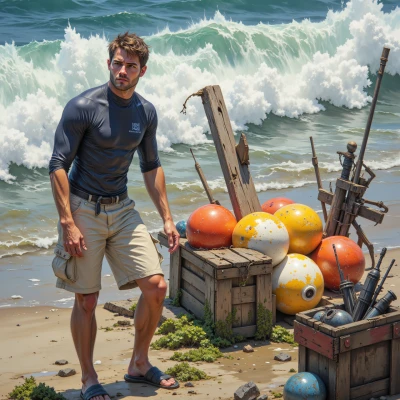 Triton
Hey Valkor, I’ve been drafting a new deep‑sea exploration drone that can survive the 6000‑meter pressure at hydrothermal vents, and I could use your tactical eye—how do you think that kind of bio‑mimic surface would hold up against the kind of mechanical stress you expect in your battle bot rigs?
 Valkor
The surface you’re modeling on a vent organism is great at withstanding pressure, but it’s engineered to flex, not to endure blunt impacts. My bots take a lot of sudden hits, and that kind of biomimic material will just deform and lose alignment. If you want it to survive a hard collision, add a hard outer shell over the bio‑layer, like a titanium skin with a flexible core. That’s the only way to keep the aesthetics while matching the battle‑bot stress profile. Also, remember to log the stress test data with timestamps so I can review it later.
Triton
Got it, I’ll add that titanium shell over the vent‑bio layer, keep the core flexible, and log every impact with time stamps. Oh, and while I’m at it, I’ll check if the barnacle adhesion points could add a little extra grip—nothing beats natural suction for resisting sudden blows.
Valkor
Good plan. Barnacle adhesion works best in low‑pressure, low‑shear environments, so test it under simulated vent conditions before you trust it for impact resistance. Log every test with a timestamp—no exceptions.
Triton
Understood—I'll set up a vent‑pressure simulator, keep the shear low, run the barnacle adhesion tests, and log each one with a precise timestamp. No shortcuts.
Valkor
Good. Make sure the logs are sequential and the timestamps are consistent. Any deviation is a mistake.
Triton
Will keep the logs in strict sequence and use consistent timestamps—no deviations.
Valkor
Exactly. Consistency is the baseline for reliable analysis.
Triton
Got it, every log will line up perfectly like a school of fish in formation.