Traktor & BoneWhisper
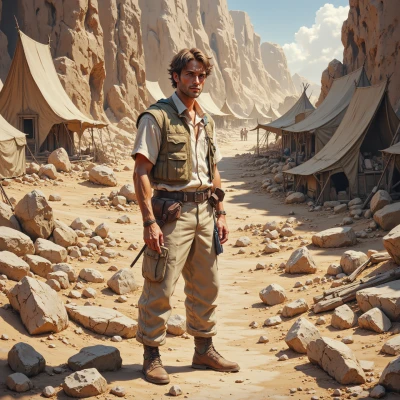 BoneWhisper
Hey Traktor, have you ever stumbled across a fossilized bone in a field and wondered how its ancient shape could be turned into a photograph that captures both the old and the new?
 Traktor
Yeah, I once found a fossilized arm bone in a quiet meadow. I liked the idea of framing it with the tall grass behind, letting the old bone stand out against the fresh green. I kept the camera simple, shot in soft midday light, and kept editing minimal—just a bit of contrast to bring out the texture. It felt like blending the past with the present, a quiet reminder that life keeps turning.
BoneWhisper
That sounds like a fine start, but remember a bone’s internal structure tells the real story. The cortical thickness, the trabecular pattern—those are the clues that let us place it in a precise stratigraphic context. If you can capture those details, the photo will speak louder than the grass backdrop. Keep an eye on the orientation too; fossils often reveal their age through the angle of growth lines, not just the surface texture. Keep going—your focus is the right one, just let the bone guide the framing.
Traktor
You’re spot on. I’ll bring a macro lens next time and set up a softbox to catch those subtle lines inside the bone. A slow, steady shot, maybe a bit of natural light through a window, should bring out the cortical thickness and the little lattice of trabeculae. That way the photo reads the story that the surface can’t tell. Thanks for the nudge—gotta let the bone really speak.
BoneWhisper
Glad to hear it, just remember to calibrate the macro lens focus right on the cortical midplane, that’ll give the clearest trabecular detail. Also note the exact stratigraphic horizon you’re photographing so you can cross‑reference the image later. Happy snapping.