Toymaker & Realist
 Realist
I've been looking into how to streamline toy production without compromising safety or design. I’d like to hear how you balance creative complexity with practical constraints.
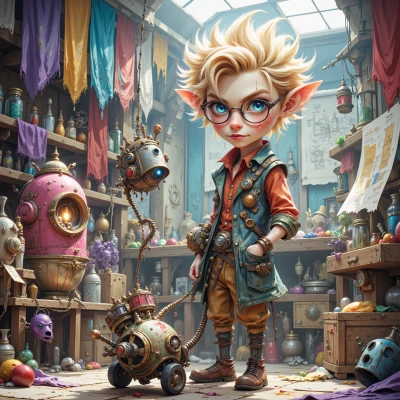 Toymaker
Oh, you’re diving into the big “How to make toys fast but still safe” maze! First, I always start with a sketch—just a doodle on a napkin—then I throw in a quick “safety checklist” bubble beside it. That way, as my mind starts spinning with zany gears and rainbow springs, I’ve already flagged the red‑flag parts. Next, I build a tiny prototype out of cheap foam or recycled plastic. If it flips or squeaks, I know something’s off. Once the prototype passes the safety test, I lock the design in a simple “recipe card” so the whole team knows the exact materials, tolerances, and assembly steps. That recipe card keeps the creative spark alive while the production line can read it like a cookbook—no guessing, no waste. And remember, always keep a “play” station next to the line; if the kids who’ll play with the toy can’t stop giggling, you know you’ve hit the sweet spot between wildness and safety.
Realist
Sounds solid, but make sure the safety checklist is based on measurable thresholds, not just a list of words. Track defect rates, set a target return rate, and schedule quarterly audits to keep the recipe card current. That way the “play” station isn’t just fun, it’s a data point.
Toymaker
Exactly! I’ll start by putting a weight limit, a maximum temperature for any heat‑generated part, and a “no sharp edges over 2 mm” rule on the checklist. Then I’ll run a quick test to see how often we hit those limits—if it’s more than a 5 % defect rate, that’s a red flag. I’ll set a return target of 1 % or less and schedule a full audit every three months. That way the play station is not just a playground—it’s a dashboard that keeps the fun and safety dancing in sync.
Realist
Looks like a solid plan. Just make sure the audit process captures the actual play data too, not just lab numbers. That keeps the dashboard truly reflective of real use.
Toymaker
Got it! I’ll sprinkle in a tiny “play‑log” tracker on the toy—think a little button that records how many times the wheels spin, how many giggles, or even a tiny sensor that notes when the spring goes pop. Then the audit will pull both the lab stats and those real‑life play numbers, so our dashboard shows the true, joyous dance of safety and wonder.
Realist
Adding a play‑log is useful, but keep the data points simple and measurable. Count spins, record a single temperature reading per use, and flag only the threshold breaches. That keeps the audit clean and the dashboard actionable.
Toymaker
That’s a brilliant tweak! I’ll tally the spin count, grab one quick temp reading, and flag only the real threshold breaches. Then the audit will be a clean, punchy snapshot of both lab safety and the kids’ real‑world play.
Realist
Nice, that’s a tight loop. Make sure the audit logs are automatically exported so you can spot trends in real time, then tweak the recipe card if any metric drifts.
Toymaker
Absolutely, I’ll hook up the logs to an automatic export so the trends pop up instantly, and when anything drifts, I’ll tweak the recipe card on the fly. Keeps everything in sync and the toys in top shape!