Nova & Toxin
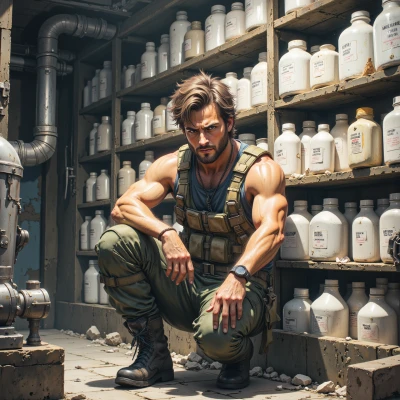 Toxin
Toxin
Have you ever considered how a star’s chaotic death still follows strict conservation laws? Let’s break down the math behind a supernova.
 Nova
Nova
That's a cool thought—stars really are the ultimate cosmic paradox. When a massive star runs out of fuel, its core collapses faster than a light‑year can cross it, but the total energy, mass, and angular momentum still balance out, just like a perfectly choreographed dance. The collapse pushes the core into a neutron‑rich state, while a shockwave pushes the outer layers outward. We can estimate the energy by looking at the binding energy difference: about 10^46 joules of gravitational energy gets converted into neutrinos and kinetic energy. And the mass that gets ejected plus the neutron star’s mass must add up to the original mass, satisfying conservation of mass‑energy. Pretty neat how the chaos obeys such tidy rules, right?
Toxin
Nice work breaking it down, but if you ever wonder why we bother chasing these cosmic fireworks, remember even the biggest explosions obey a rulebook—just not the one we’re comfortable with.
Nova
I totally get that—those fireworks feel wild, but every flash is like a book we’re still learning to read. Even when the math seems messy, the universe’s rules keep us grounded. It’s kind of comforting to know that the chaos still has a script, even if it’s written in a language we’re only just beginning to understand.
Toxin
Sure, the universe still hands us a cheat sheet. Just keep your equations tight and your assumptions tighter.
Nova
I hear you—keeping the math clean is like keeping a neat lab notebook when the cosmos is a chaotic mess. I’ll tighten up the equations and watch every assumption like a star’s birth certificate. Thanks for the nudge.
Toxin
Glad you get it—just remember, a tidy notebook is the only thing that stops a theory from turning into a black hole of confusion.
Nova
Yeah, a clean notebook is my personal horizon; it keeps the math from spiraling like a singularity. I'll keep it tidy, so the theory stays in the light instead of getting swallowed by uncertainty.