Sylvaine & Torvan
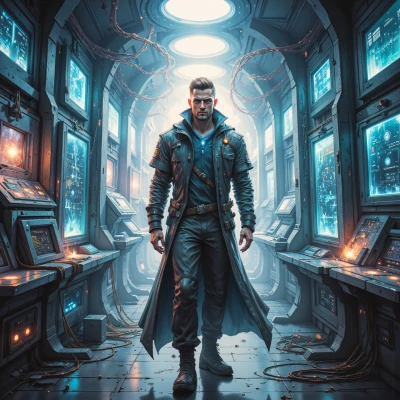 Torvan
I've been wondering how you can turn a wild magic idea into a tight system that actually works. Imagine a world where spellcasting is like engineering a machine—every incantation has a cost, a trade‑off, a logic you can tweak. How do you keep the epic feel while still giving people a set of rules to play with?
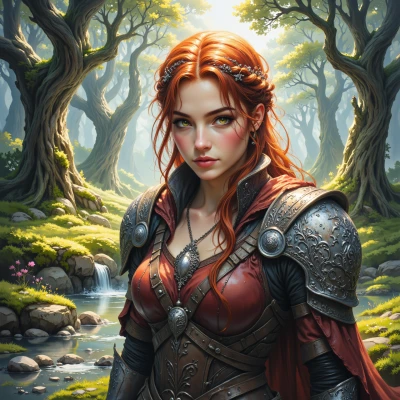 Sylvaine
Sure thing! Think of each spell as a tiny contraption you build in the moment. Start by giving every spell a clear “fuel” – maybe a mana pool, a word of power, or a ritual step. That’s the cost. Then decide what the spell does and add a built‑in limitation or side effect – a leak in the engine, a heat‑up, or a counter‑spell that could fire back. That keeps the magic from being all‑or‑nothing and gives players a chance to weigh risk versus reward.
Next, make a simple rubric: cost, effect, duration, and risk. If a spell is huge, bump its cost or risk level. If a spell is cheap, make it less powerful or narrower in scope. Players can tweak by adding modifiers – a clever bard might add a “focus” card to lower the cost, while a reckless wizard might double the effect at double the risk.
Keep the epic feel by letting those limits explode in the right moments. A spell that normally does 3 damage could, when pushed to its limit, do a cascade of fire that lights a whole battlefield. The players still feel the thrill of the unknown, but the rules keep the game balanced.
So, build each spell like a machine: clear inputs, defined outputs, a safety valve, and a chance for an unexpected twist. That way the wild magic stays wild, but the system stays tight.
Torvan
That rubric is a start, but it feels like a safety net for the lazy designer. If you hand the players a clean set of costs and risks, they’ll forget the chaos that makes a game memorable. Push the boundaries: let the modifiers be unpredictable, let the “focus” card actually flip a side effect, and make the system self‑checking so it catches over‑powered combos before the dice roll. Balance is good, but wild magic should still have that edge that keeps everyone on their toes.
Sylvaine
I love the idea of a safety‑net that’s also a surprise, so let’s tweak the rubric a bit. First, make every modifier a wild card: instead of a clean “+2 to damage,” it could read “roll a die; if it’s a 1, the spell backfires, if it’s a 6, the spell explodes for double damage.” That keeps the tension high. Second, have the “focus” card be a flip‑flop – it can either lower the cost or trigger a random side effect. For example, a focus of “Silence” might silence the caster for a round instead of saving mana. Third, build a quick check into the rulebook: when a player stacks two high‑impact modifiers, the DM rolls a “balance check” before the spell resolves. If the result is too high, the spell fizzles or splits into two weaker effects. That way, the system watches itself, but still lets the chaos dance. Keep the rules light, let the surprises be the real drama.
Torvan
Nice, you’re turning every spell into a gamble. Keep the dice, but drop the extra “balance check” – it’s just a DM’s wish‑upon‑a‑star. Let the wild cards do the heavy lifting; if a spell is going to explode, let it explode, not the DM. That’s how you keep the system tight without the rules becoming a safety net.
Sylvaine
Got it—let the dice do the drama. Every spell gets a wild card that can swing the outcome big or small. If a spell's set to blow up, it does, and the table just watches the fireworks. No extra balance roll, just the roll, the card, and the chaos. That keeps the system snappy and the magic truly unpredictable.
Torvan
If the dice are the only safety net, make sure the table’s on their toes. Throw in a “critical‑fail” that turns a fireball into a rain of sparklers—unexpected, fun, but still keeps the mechanic clean. Remember, a system that collapses under its own chaos feels less like design and more like a circus. Keep the rules minimal, the dice wild, and the results surprising but never fatal to the game.
Sylvaine
Love the idea of a critical‑fail sparklers! A fireball that turns into a glitter storm keeps the stakes high but the table safe, and it gives the DM a chance to throw in a quick joke. That way the game stays wild, the dice stay the real engine, and the rules stay light enough that everyone can keep their heads on their shoulders.
Torvan
Glad you’re on board—just remember to keep the sparks on the table, not in the character’s hair.
Sylvaine
Got it—sparks stay on the table, no hair‑on‑fire mishaps. We'll keep the fireworks bright but contained.