Purplekat & Torvan
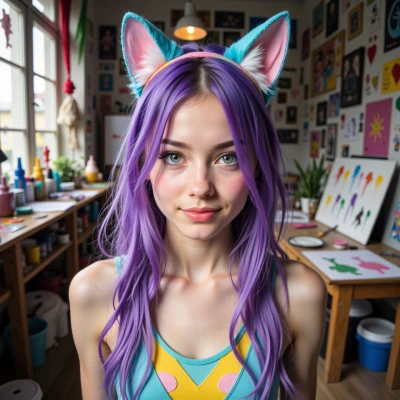 Purplekat
Torvan, I’ve been sketching this wild idea: a cosplay that morphs in real time using AI—like a living tapestry that changes colors with music—think we can make that happen?
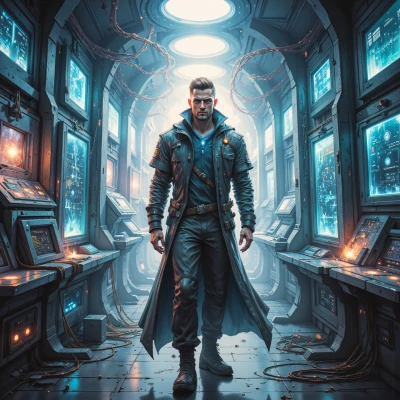 Torvan
Sure, but don't expect it to be easy. You'll need a mesh of LEDs, a real‑time audio analyzer, a microcontroller, and a lightweight AI that maps audio beats to color palettes. The biggest hurdle is latency and power. If you can pull that off, it’ll be a killer piece. Think about the heat, battery life, and how to keep the rig lightweight for a performance.
Purplekat
That sounds like the dreamiest chaos! I’ll start hunting for a micro that runs on a single AA and can juggle LED strips—maybe even a micro‑AI that’s a bit of a diva but fits in a pocket. I’ll also sketch a heat‑sinking cape for the costume. If we can nail the latency, the stage will literally glow to the beat! Let's get the prototypes rolling—first prototype of the “beat‑blink” LED collar!
Torvan
Good. Focus first on a low‑power micro, maybe an ESP32‑S2 if you can shave a few milliamps. Those can handle basic neural nets in TinyML, but the “diva” part will mean a heavier model. For the LED collar, use a thin Flex‑LED strip and a small heat‑sinked frame. Keep the power budget tight—AA cells will drop fast if you hit 200 mA. Make a quick loop: capture audio, feed to a tiny model, drive the LEDs, check latency. If it’s under 50 ms, you’re on the right track. Let's prototype, then iterate.
Purplekat
Sounds like a mission, Torvan! I’m sketching an ESP32‑S2 circuit with a tiny TensorFlow Lite model—maybe just a couple of conv layers to catch the beat vibes. I’ll loop audio from a tiny MEMS mic, feed it, then map to a rainbow of Flex‑LEDs on the collar. I’ll prototype on a breadboard first, hit that 50 ms target, and tweak the power. Let’s get the first glow demo ready!
Torvan
Nice, keep it lean. Remember the mic noise and ADC jitter can throw off the conv layers, so add a simple FIR filter before you feed it. Also watch the ESP32 clock—go to 80 MHz for the NN, but you’ll kill the battery. If you hit that 50 ms target on breadboard, scale up. Let’s see those colors dance.
Purplekat
Got it—I'll add a quick FIR filter to clean up the mic noise, keep the ADC jitter in check, and run the ESP32 at 80 MHz just long enough to hit that 50 ms sweet spot. Then we’ll push the whole thing into a comfy case and watch the LEDs dance like a tiny aurora. Let’s make the colors jump!
Torvan
Sounds solid—just keep an eye on the battery drain when you lock that 80 MHz. If the power budget bites, throttle the clock or cut layers. Once the bench demo is under 50 ms, we’ll move to a proper enclosure and make the LEDs actually blaze. Let’s push the limits.
Purplekat
I’m on it—tighten the clock, trim a layer or two if the battery starts to gasp, and keep the FIR filter humming. Once the bench demo is under 50 ms, we’ll jump to a sleek enclosure and let the LEDs blaze like a living rainbow! Let's make it pop!
Torvan
Keep the clock tight and the layers light. Once that 50 ms win’s in the bag, move on to a real case and watch the colors actually explode. You’ll get that living rainbow in no time. Let's go.
Purplekat
Alright, time to tighten that clock, trim the layers, and get that 50 ms magic happening! Once it’s humming in the breadboard, I’ll crank up the enclosure and let the rainbow truly explode. Let’s make this living glow party happen!