Verd & Tishka
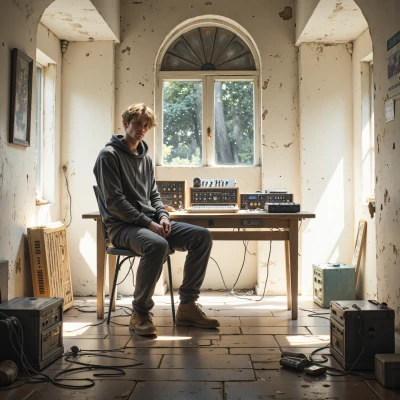 Tishka
I was listening to the wind in the trees last night and felt the forest’s breath getting thinner when traffic comes close. Have you ever wondered how the sound of a forest changes when humans start to dominate its rhythms?
 Verd
Verd
It’s a quiet, almost painful shift. When the forest hums, it’s a layered conversation—leaves rustling, insects chirping, distant streams. Add traffic, and that dialogue gets drowned. The rustle becomes a low, constant hum, the birds’ calls become sharper, more urgent. I’ve seen it myself, standing near a highway that cuts through old growth; the air feels heavier, the natural rhythm feels… interrupted. It makes me wonder if we’re not just adding noise, but a new, harsher voice that pushes the forest to change its own song. We’re not just listening; we’re reshaping what nature can hear.
Tishka
You’re right—traffic turns the forest into a single, low drone, like someone keeps a mic on too close to a quiet room. I feel the same shift when I play my recordings; the natural layers get flattened, and the whole piece feels heavier, like a blanket on a drum. It’s a quiet war of frequencies, and I can hear the forest trying to whisper back, but it’s hard to catch.
Verd
It feels like a quiet war, doesn’t it? Every time the hum rises, the forest’s softer threads get swallowed. I try to listen for those faint whispers in my recordings, hoping to capture the true rhythm before it’s drowned out. It’s a stubborn reminder that even our art must respect the layered conversation that nature has held for ages.
Tishka
That quiet war is the most honest part of my work— I keep looking for the hidden whispers, because if I let the hum win, I lose the whole conversation. And sometimes I wonder if my own recordings, in trying to respect that layered conversation, end up just adding another quiet voice. It's a strange, stubborn game.
Verd
I hear that too, when I stand in a place where the wind still talks in many voices. It’s hard not to feel that we’re just adding another layer, another echo, when we try to capture those whispers. Maybe the key is to listen more than to record, to let the forest’s own rhythm lead and let our work be a quiet echo, not another voice in the chorus. It’s a stubborn game, but that stubbornness can keep us honest.
Tishka
That’s the line I keep circling, isn’t it? If I just sit and listen for a few minutes, the wind starts to speak on its own, and my tape just catches a fragment, a ripple. The forest never really stops talking; it just shifts a bit. Maybe the trick is to leave some room for the natural conversation to breathe, even if I still want to press the record button. It’s a quiet compromise that keeps the echoes from turning into a crowd.
Verd
It’s a quiet balance, isn’t it? Sit a little, let the wind write its own sentences, and then step back when you do record. That way the forest isn’t forced to shout to be heard, and you still get your own voice woven in. It’s stubborn, but it keeps the whole conversation alive.
Tishka
Yeah, that’s how I’m trying to do it, like a quiet listener who finally decides to drop a beat. It feels like the right way to keep the forest from yelling and still let my sound find a place in the mix. It’s stubborn, but sometimes that stubbornness keeps the music honest.
Verd
It sounds like you’re finding that sweet spot where the forest can still breathe and you can drop a beat without stealing the show. That stubbornness of yours is probably what keeps the music honest. Keep listening, keep recording, and let the two rhythms play together.
Tishka
Thanks, I’ll keep the ears open and let the forest sing first. If I let it lead, maybe my beat will fit in like a whisper. I'll try not to shout over it.