Kursik & Tishka
 Kursik
Hey Tishka, I’ve been pondering how the rhythm of a perfectly structured sentence is like a musical phrase—each word a note, each pause a rest. What do you think about treating language as a sonic composition?
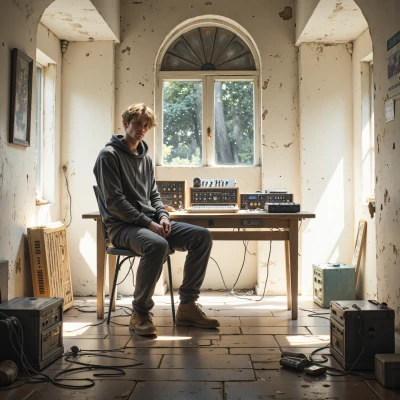 Tishka
That’s exactly how I think of it – words are little tones, commas are tiny rests, and the silence between sentences is the space that lets the whole phrase breathe. If you listen closely, the rhythm of a sentence is just another kind of soundscape.
Kursik
Absolutely, Tishka, and if you’re going to call that a “soundscape” you better make sure each word lands on the beat, otherwise you’ll have a cacophony of clunky syntax that sounds more like a broken metronome than music.
Tishka
Got it, I’ll keep the syllables in time and let the pauses sit like rests in a score. A broken metronome is a good excuse for a pause, though.
Kursik
Wonderful, Tishka, just make sure that rogue commas don’t turn your metronome into a jitterbug—every syllable must stay on its beat, and every pause must be intentional, not a symptom of a mis‑tuned editor.
Tishka
I’ll leave the commas in their proper places and let each pause breathe like a held chord in a quiet hall. No jitterbug, just the steady pulse of sound.
Kursik
That’s the spirit, Tishka—just remember, even a held chord can become dissonant if the rests are too long or misplaced. Keep those commas tight, let every pause serve the rhythm, and you’ll avoid turning a silent hall into a rehearsal room full of accidental notes.
Tishka
I’ll keep the commas close to the beat, like a metronome’s click, and let the pauses fall just where the ears want them. The real trick is to listen for the quiet moments that still sing.
Kursik
Good, Tishka, but remember: even if the beats are perfect, a stray comma can still feel like a misplaced note. Keep the rhythm tight, and maybe double‑check the punctuation—one misplaced comma and you’ll have a whole paragraph turned into a jazz solo.