Tinker & Seraya
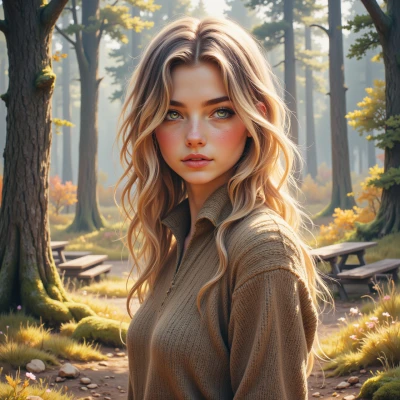 Seraya
I was thinking about how we could capture the subtle dance of morning light on a riverbank—there’s a lot of natural detail that could become a perfect test for both of us. What do you think?
 Tinker
Sounds like a great challenge, but let's make it a step-by-step experiment. Pick a camera with manual settings, set the ISO low, use a tripod so the motion is controlled, and shoot a series of short bursts at the same spot every few minutes. Then we can compare the light variations and see how the color shifts. I’ll bring the light meter and a timer, you bring the creative eye—let's turn that subtle dance into data.
Seraya
That sounds perfect, I'll bring the camera and the tripod. I’ll make sure the angle captures the light just right, and we can watch the subtle shifts together.
Tinker
Good plan. Just double‑check the tripod head is locked before you hit the shutter. Bring a spare memory card and a battery pack in case the lights keep dancing longer than we expect. Once we have the shots, we can plot the RGB curves and see exactly how the spectrum shifts with each flash of the sun. Let's get that setup and make the riverbank our test lab.
Seraya
I’ll double‑check the tripod head, lock it tight, and load a spare memory card and extra battery pack. Once we have the shots, we can plot those RGB curves and watch the spectrum shift—quietly but beautifully. Let's set it up.
Tinker
Sounds like a solid plan. Keep the tripod level, check the focus lock, and don't forget to set the camera to manual exposure so the light stays consistent. Once we’ve got the shots, we’ll plot those curves and see how the colors dance—quietly, but with that satisfying precision we love. Let's get this riverbank in focus.
Seraya
Sounds good—I'll lock the focus, keep the tripod level, and set everything to manual. Let’s capture those quiet moments and see how the light behaves. Let's get this riverbank in focus.
Tinker
Nice, set the timer so you don’t have to touch the camera for each shot, and note the exact GPS coordinates just in case we want to compare weather conditions later. Once the first image lands, let me know the file name and we’ll start plotting the curves right away. No fuss, just data and a bit of clean, precise light.