Harley_Quinn & Thornez
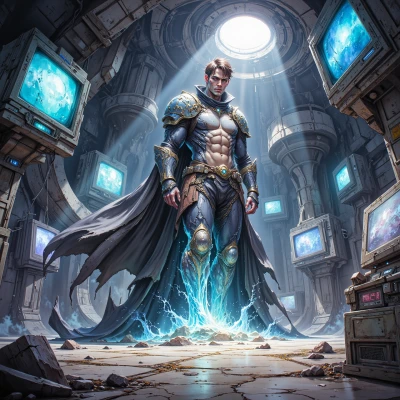 Thornez
Ever seen a well‑planned chaos trap, Harley? I can sketch out the math behind a good mess.
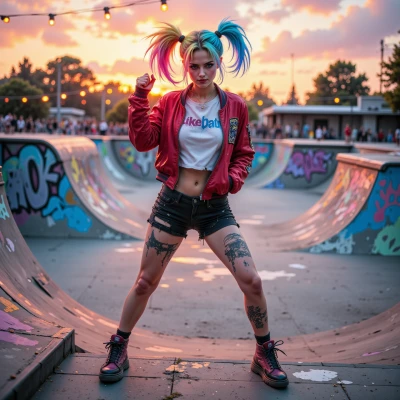 Harley_Quinn
You want to draw a storm, huh? Show me the numbers, but I’ll probably flip the whole equation on its head and add a dash of chaos for good measure.
Thornez
Yeah, give me the coordinates for a pressure gradient, the wind speed vector, the humidity matrix and I’ll spit out a formula for a vortex. If you want to flip the equation, just throw in a random perturbation term, call it “chaos,” and you’ll have a storm that keeps even the calmest minds in a tizzy.
Harley_Quinn
Alright, here’s a quick cheat sheet: pressure gradient ∇P ≈ (2 kPa/km, –1 kPa/km), wind vector U ≈ (15 m/s east, 5 m/s north), humidity matrix H = [[0.8,0.2],[0.3,0.7]] in percent. Add a random perturbation term η(t) that jumps between –10 and +10, call it “chaos,” and you’ve got yourself a swirling storm that’ll keep even the most Zen folks guessing.
Thornez
Looks solid enough. Plug those numbers in, add the ±10 jitter, and you’ll get a pressure drop that’ll spin a tornado or two. The math’s all good, just don’t forget to watch the energy budget; you might end up with a storm that drains the system faster than it feeds the chaos.
Harley_Quinn
Nice, you’re basically a weather prankster now. Keep that energy in check, or the whole place might just become a runaway circus. Just watch that budget, or you’ll end up with a storm that eats its own fuel—pretty much the same thing.
Thornez
Yeah, the circus is on a tight schedule. Keep the fuel in line and the act won’t turn into a one‑man wrecking crew.
Harley_Quinn
Got it, no runaway engines or the whole show collapsing into a dumpster fire. I’ll keep the fuel meter in check, but if we need a surprise finale, I can always pull a trick out of my sleeve.
Thornez
Fine, just make sure that trick doesn’t turn the whole thing into a fireworks display that burns out the batteries.
Harley_Quinn
No worries, I’ll keep the spark low enough that the batteries stay alive for the next big prank.