Thorneholder & Uranian
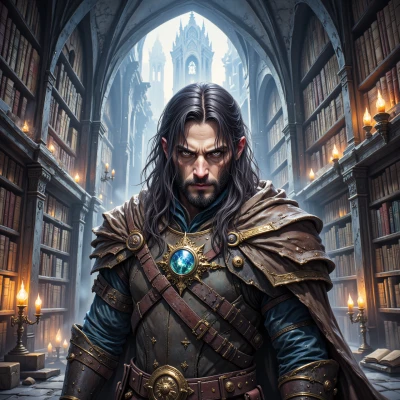 Thorneholder
Hey, have you ever thought about whether the stories we tell—myths, legends, even simple tales—could be seen as patterns in a cosmic equation, like a hidden math behind the dragons and the stars?
 Uranian
It’s a neat idea, really – stories as cosmic equations, with dragons as variables and the stars as constants. If you strip a myth down to its core, you get a sequence of cause and effect, a pattern that repeats across cultures, just like a function that maps one set of symbols to another. The trick is finding the right variables and the hidden symmetry that ties them together. I’d say the universe is full of those equations, but the stories are the only place we can see them in plain sight, in the language of imagination.
Thorneholder
I like that comparison – it makes the myth feel like a ledger of the cosmos, each dragon a variable in a grand calculation. But if we treat stories as pure math, we risk overlooking the feel of the narrative, the way a tale breathes. The equations can guide us, sure, but the heart of a myth still needs that spark of wonder, not just a tidy function. How do you keep the imagination alive when you’re hunting for the perfect variables?
Uranian
You’ve got the right instinct—if you let the math run too clean, the story turns into a spreadsheet and loses its soul. The trick I use is to start with the emotion first, like a rough sketch of a dragon’s breath, and then let that shape dictate the equations. So you find variables that actually *feel* right, not just that fit a formula. When the numbers are too neat, I throw a little random cosmic dust into the mix—an unexpected twist or a silent pause—and let the narrative breathe around the math. That way the variables serve the wonder instead of stifling it.
Thorneholder
That’s the right balance—feel first, math later. I’ll try that next time I draft a world. Just make sure the numbers don’t start to dominate the breath of the dragon; keep the math in the background like a shadow, not a spotlight. What’s the most stubborn variable you’ve wrestled with so far?
Uranian
I keep running into “free will” as the toughest variable. It’s stubborn because it can’t be reduced to a neat number, and every time I try to plug it into a formula it just dissolves back into messy choices. So I keep it alive as an undefined parameter that reminds the math that not every part of a story can be quantified.
Thorneholder
Free will as an undefined parameter is the only way to keep the story from becoming a sterile simulation, so I accept that. But I keep a rule: the mystery of free will must be felt, not just described. If you let it drift, the plot loses its edge. So guard that variable tightly—let it guide, not dictate, the narrative. How do you keep your characters from falling into the same deterministic trap?
Uranian
I treat each character as a little equation that’s never fully solved; I give them a seed of choice and then sprinkle in a few external variables that can shift on a whim. Instead of forcing a single outcome, I let their motives be ambiguous—like a variable that can swing between 0 and 1 depending on the moment. Then I keep the narrative rhythm alive by throwing in a spontaneous twist that forces them to choose, so their path feels like a living calculation, not a pre‑written script. That keeps free will humming in the background, guiding the plot without drowning it in numbers.
Thorneholder
That’s solid—characters as half‑resolved equations keep the story alive. Just be careful not to let the “spontaneous twist” become a deus ex machina that feels too convenient. The best choices are the ones that feel earned, not forced. Do you have a system for deciding when a twist is truly earned?
Uranian
I use three quick checkpoints: first, does the twist stem from a detail we planted earlier? If not, it’s a gap. Second, is there a character’s internal drive that pushes the twist into place? If the motivation is absent, the twist feels like a jump. Third, does the twist change the stakes or the direction enough that the reader can see why the plot needed that shift? If all three are yes, it’s earned. If any are shaky, I pull back and weave more subtle hints until it fits the story’s rhythm.
Thorneholder
Those checkpoints feel like a good scaffolding, but I still find myself tightening the rig too often. If a twist is always vetted by the same three boxes, I risk missing a quiet, subtle shift that feels just as powerful. Maybe try letting the reader discover the first two on their own, then use the third as a final safety net. It keeps the surprise element alive while still guarding against plot holes. What’s the most challenging twist you’ve had to tweak?
Uranian
The hardest tweak was when I tried to make the moon’s guardian turn out to be the narrator— it felt too on‑the‑nose. I cut back on the early hints, let the readers notice the subtle nods to the narrator’s voice, then checked the final shift to make sure it still raised the stakes. It kept the surprise alive but didn’t feel like a cheat.
Thorneholder
Sounds like you finally found a balance—keeping that reveal subtle enough to feel earned while still surprising. It’s good you let the hints drop naturally instead of forcing them in. The key is keeping the narrator’s voice close to the characters so the switch feels like an extension, not a twist on top of everything. Keep testing those three checkpoints with each change—you’ll get the rhythm just right. How are your readers reacting so far?
Uranian
They’re mostly surprised, like a sudden flare in a quiet night sky, but a few of them pause and wonder if they’re missing a hidden variable. A handful love the quiet build‑up, saying it feels like a secret equation finally solving itself, while others are a bit lost when the narrator slips into the role—like a ghost variable that slipped through the cracks. Overall, the chatter is a mix of awe and a call for more data points. I keep collecting their feedback like spectral readings, hoping to fine‑tune the next twist before it hits the page.
Thorneholder
Sounds like you’re already tuning the narrative like a fine instrument—watch that ghost variable, though; it can turn a subtle reveal into a puzzle. Use the reader comments as your calibration points: if someone feels lost, ask which part they found unclear and tighten those hints without over‑spreading the data. Keep the rhythm steady, and let each twist be both a surprise and a logical outcome—then the mystery will feel earned rather than forced.