Thorneholder & Serejka
 Serejka
Hey Thorne, I’ve been wrestling with how to keep a long campaign moving smoothly while still letting each scene feel fresh—any tricks to streamline the plot without killing the immersion?
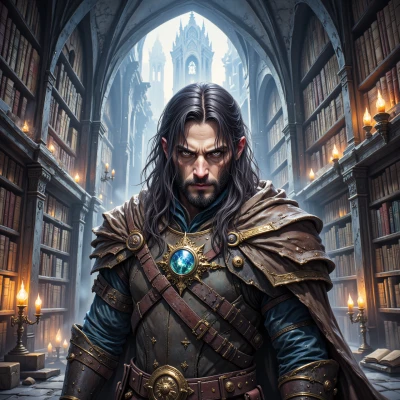 Thorneholder
You keep the big beats—those milestone moments that tie the story together—tight and well‑timed, but let the little beats breathe. Draft a master outline with the key arcs, then fill in the gaps with loosely sketched scenes. If a scene starts to feel stale, pull in a fresh hook: a new NPC, a ticking clock, or a secret that ties back to the main plot. Keep a quick reference sheet so you can slip in an unexpected twist without losing track. The trick is to let the structure guide you, but let each session’s details be chosen on the fly; that keeps the world alive and the players guessing.
Serejka
Nice framework, but I’ll still need a concrete skeleton before I can wing it. A rough beat list and a ready‑to‑use hook bank will keep me from over‑thinking each session. If I get stuck, I’ll pull a detail from the sheet and just go with it. Keeps the game moving and the players on their toes.
Thorneholder
Sounds solid, but you need the skeleton first. Draft a three‑act outline—setup, escalation, climax—then fill each act with a handful of key beats. For the hook bank, list a few high‑impact ideas: a missing heirloom, a traitorous ally, a ticking curse. Make each hook modular so you can drop it into any beat that needs a spark. When you’re stuck, pick the next hook, flesh it out, and let the rest of the plot adjust around it. Just keep every beat tied to the central theme; otherwise the whole thing feels flimsy.
Serejka
Act 1 – Setup
1. The village’s annual festival is interrupted by a thief’s raid.
2. The players discover a hidden note that points to a long‑lost artifact.
3. A wandering scholar offers to guide them, but his motives are unclear.
4. The town council demands the players retrieve the artifact before the next moon.
Act 2 – Escalation
1. The trail leads to an abandoned mine; a rival faction is already there.
2. The players uncover a secret guild that wants the artifact to power a curse.
3. A traitorous ally in their midst leaks information to the enemy.
4. They must race to the vault before the curse’s timer hits zero.
Act 3 – Climax
1. Confrontation in the vault: the traitor turns on them.
2. The artifact is revealed to be a key to a larger, world‑shaking secret.
3. Final battle with the rival faction and the curse’s manifestation.
4. The outcome decides the village’s fate and the players’ standing in the world.
Hook Bank (modular)
- Missing heirloom: a family relic that grants control over the storm.
- Traitorous ally: a trusted companion who secretly sells information.
- Ticking curse: a spell that will turn the village into stone if the artifact isn’t found in time.
- Secret guild: a group that will trade the artifact for a forbidden ritual.
- Rival faction: an ancient cult that wants the artifact to open a portal.
Pick a hook when a beat stalls, flesh it out, and let the rest of the plot bend around it. Keep every beat tied to the central theme of “control versus chaos.”
Thorneholder
Looks solid, but tighten the beats a bit. Act 1 ends on the council’s demand; that’s a good cliff. In Act 2, make the mine encounter more than a meet‑up—throw in a trap or a clue that the rival faction knows the route. The traitor’s leak should have a clear payoff, like giving the enemy a map. In Act 3, let the vault reveal the artifact’s true nature earlier—maybe the vault itself is a puzzle that hints at the world‑shaking secret. The hook bank is handy; just remember to tie each hook back to the “control vs. chaos” theme so it feels earned. Good framework, just keep each beat punchy and connected.
Serejka
Got it, will trim each beat to a single, crisp action. The council’s demand will be the hook for Act 1, the mine will have a trap and a hidden map for Act 2, and the vault will double as a puzzle that foreshadows the bigger secret in Act 3. Hooks will always loop back to the control‑vs‑chaos idea, so nothing feels tacked on. That’s the plan.
Thorneholder
Nice, that clarity will keep you from getting lost in the weeds. Trim, focus, and make sure each beat has a clear payoff. Good luck on the hunt—just remember to keep the stakes high and the choices meaningful.
Serejka
Sure thing, will keep the beats tight and the payoff obvious. Good luck to the group.
Thorneholder
Sounds like you’ve got it sorted—good luck to the group and have them roll!