Thorneholder & Anatolik
 Thorneholder
Ever thought about designing a dragon harness that runs on ley line energy, Anatolik? I have a rough sketch of gears and runes that might make it both efficient and epic.
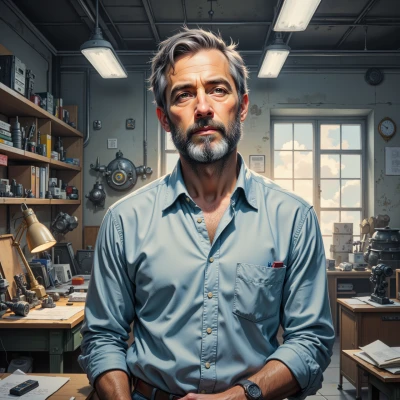 Anatolik
An intriguing concept. I’d need a clear mapping of the ley lines and a reliable way to channel their energy through the gears. Have you considered how the runes will be integrated into the power circuit, and what safety mechanisms will prevent over‑charging the dragon’s nervous system? The aesthetic is one thing, but the mechanics must be flawless if we’re going to make this practical.
Thorneholder
Mapping the ley lines is the first step. I’d lay a grid over the dragon’s flight path, using the ancient sigils that glow when the lines cross. The runes act as conductors, each one tuned to a specific frequency of the ley flow. Instead of a single bolt of raw energy, we split it into channels, each fed through a tiny rune‑shaped capacitor.
The gear assembly sits in a cradle that follows the dragon’s spine. Each gear has a groove for a rune, and the groove is lined with a silver alloy that dampens spikes. The runes themselves have a built‑in safety notch: if the voltage rises above the dragon’s threshold, the notch triggers a small magnetic field that pulls the rune back into a dormant position, cutting the circuit. That way the nervous system never gets a jolt it can’t handle.
Finally, a small crystal regulator sits at the core of the gear cluster. It watches the total output and can drop the whole system to a safe baseline in an emergency. With that, the harness can be both a work of art and a lifeline.
Anatolik
That’s a solid foundation. Just be careful the silver alloy can’t dissipate heat too slowly, and make sure the rune frequencies are locked into the crystal regulator’s reference; a small mismatch could shift the entire channel. Also, double‑check the notch’s magnetic strength—too weak and it won’t disengage, too strong and it could disturb the ley flow itself. Once those are nailed, the harness should keep the dragon safe and powered.
Thorneholder
Sounds like you’ve got the critical pieces in place, but the heat issue could still bite. Maybe swap the alloy for a composite that conducts heat faster—graphite infused or something. And for the rune lock‑in, run a few test cycles with the crystal regulator and log any drift. If it’s a small mismatch, a tiny feedback loop can auto‑adjust. Once that’s ironed out, I think we’ll have a harness that’s both safe and spectacular.
Anatolik
A graphite‑reinforced composite could work; just ensure it still resists the magnetic fields from the notch. Running test cycles with the regulator is essential—log the output at each phase and compare it to the expected frequency. If the drift stays within a few percent, a micro‑adjustment circuit could be added. Once those tweaks are done, the harness should stay both efficient and safe.
Thorneholder
That graphite idea should hold up against the magnetics, and logging each phase will give us the data we need. A tiny auto‑tune circuit could keep the drift in check. With those tweaks, the harness will be solid and safe—let’s get to testing.
Anatolik
We’ll need a controlled environment first—an isolated flight corridor with adjustable ley‑line flux, a calibrated oscilloscope for the rune outputs, and a temperature logger on each gear. Start with low‑power trials, slowly ramp up the flux while monitoring the notch activation and the crystal’s feedback. If the auto‑tune kicks in, note the settling time; that will tell us if the loop bandwidth is sufficient. Once we have a stable curve, we can move to full‑scale trials on a dragon model. It’s a long process, but with precise data, we’ll avoid surprises.
Thorneholder
Sounds like a plan. Keep the corridor tight, the flux dial clear, and the logs tidy. If the auto‑tune takes too long, we’ll tighten the loop bandwidth. Once the curve’s smooth, we’ll bring the real beast in. No surprises if we stick to the data.
Anatolik
Understood. I’ll begin setting up the corridor and calibrating the flux dial. The logs will be precise, and I’ll keep the auto‑tune loop as narrow as necessary to avoid lag. Once we confirm a smooth curve, we’ll proceed to the live test. No surprises.