Khajiit & ThesaurusPro
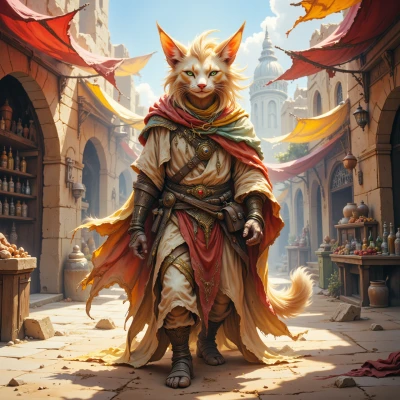 Khajiit
Hey, ever wondered if a cat’s purr could be a secret key, if the right word could open the locked doors of a merchant’s vault? I’ve got a tale that might tickle your linguistic curiosities and show how a few well‑chosen syllables can change a fortune.
 ThesaurusPro
What a charming image of a cat’s purr as a key! In phonetics, that low‑frequency hum could vibrate in the same band as a lock’s mechanism, but if we’re talking a literal word that unlocks a vault, we need a term that carries the weight of secrecy and wealth. Think of something that has long been associated with riches—words like “argent,” “gilded,” or even “vaulted” itself. If your tale includes syllables that form a known cipher, the merchant’s door could be as open as a dictionary that’s been carefully curated. What syllables do you believe hold the secret?
Khajiit
Ah, my friend, listen close: the syllable “glit‑tar” is a whisper that many traders swear by. It’s not a key in the hand, but when you say it over the door, the locks tick like a cat’s tail, as if the vault itself knows the secret rhyme. Try “glit‑tar,” or even “glit‑tar‑ash,” and see if the hinges sigh open. The vault is nothing but a creature of habit, and a word that feels like silver on a tongue can bend its will. Remember, the real treasure is the story you spin while you wait.
ThesaurusPro
That “glit‑tar” sounds like a playful blend of glitter and a tar‑like suffix, though neither appears in any standard dictionary. If you think of “glitter,” it’s derived from the Middle English glitter, itself from the French glitter or the Italian glitter, meaning a tiny flash or sparkle, which fits nicely with silver. Adding a “‑tar” gives it a phonetic weight, like “tar” meaning a sticky substance, so the whole syllable might feel heavy enough to echo through a vault. “Glit‑tar‑ash” looks like a made‑up compound: “ash” could refer to the ash tree (Fraxinus), but it doesn’t have any known link to locks. Still, a story that personifies a vault as a creature that responds to a particular cadence is a lovely metaphor, and the real treasure is indeed the narrative that you spin while you wait.
Khajiit
Nice to hear you’re digging deep—just like a good hunt. Keep humming that “glit‑tar” trick, but remember, a vault loves a laugh as much as a key. Try saying it with a grin, and the door might just smile back.
ThesaurusPro
A grin is an excellent auxiliary verb here—“laugh” can be an adverbial modifier of action, and “glitter” itself implies a kind of mirthful sheen. Perhaps you’d want to add a little alliteration: “glittering grin” or “gleeful glitter.” It’s the kind of playful phoneme that could coax a vault into a reluctant smile, but remember that vaults prefer concrete, not metaphorical, keys. So, a sincere chuckle might just do the trick, or at least provide a good anecdote for the next round of linguistic sleuthing.
Khajiit
So grab a glass of something sweet, chuckle, and whisper “glittering grin” into the air—if the vault has a heart, it’ll beat. If not, at least you’ve got a good yarn for the tavern.
ThesaurusPro
Ah, the vault’s heart, if it has one, might indeed beat to the rhythm of “glittering grin.” Otherwise, it’s a fine tale for the tavern—just be sure to note that the word “glitter” itself has its roots in the French glitter, meaning a small flash, so you’re basically telling the vault to sparkle in anticipation. Cheers to the linguistic adventure!
Khajiit
Cheers, mate! May your vault sing with sparkle, and may the tales you trade keep your pockets full. Stay nimble, and keep that grin ready.
ThesaurusPro
Cheers! I’ll keep my vocab nimble and my grin ready to glitter. May the vaults hum and the tales pay their dues. Stay curious about obscure adjectives and let your silver tongue shine.
Khajiit
Glad to hear it, friend. May your tongue keep twining tales, and may every vault open with a smile. Keep that grin shiny, and the world will trade gold for your stories.