TheoActual & Grimnar
 TheoActual
I’ve been studying how information shapes battlefield outcomes, and I’m curious—what’s your take on gathering intel before a fight?
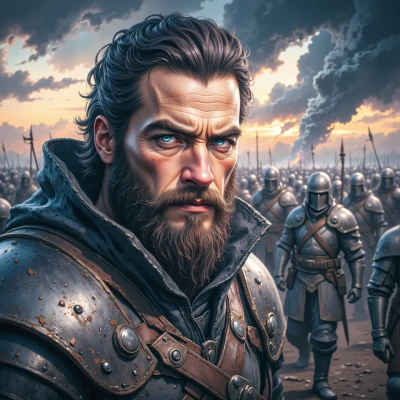 Grimnar
Intelligence is the wind before the storm. Know the enemy’s numbers, their leaders, the terrain, and how they fight. Send a scout before the clash, listen, ask questions, then plan. A soldier who moves without knowledge is a target. Keep your eyes open and your mind sharp.
TheoActual
That’s solid advice, but the real challenge is getting accurate data—sources can be biased, misinformation is everywhere. How do you vet what you hear from scouts or intercepted chatter?
Grimnar
We test what we hear in the heat of the field. First, see if two or more scouts report the same thing from different angles. If only one voice says it, question that voice. Look for patterns that match what you already know about the enemy’s habits. When you can see the evidence yourself—such as broken siege lines or captured documents—trust that. And never let emotion decide; let facts, not rumors, guide the blade.
TheoActual
Sounds thorough, but is there ever a case where you’re forced to act before you’ve confirmed two independent sources? How do you balance the need for swift decisions with your insistence on cross‑checking every detail?
Grimnar
Sometimes the wind will not wait for two scouts to meet. In those moments the first step is to gauge the risk. If the cost of delay is a lost life or a lost position, trust the single most reliable source you have—someone who has proven himself in battle. Move with caution, prepare to adjust as new intel arrives, and keep the squad ready to hold or withdraw if the truth turns out different. Speed is a tool, not a shield. Use it wisely.
TheoActual
Good point—speed can be the difference between survival and disaster, but that doesn’t mean you abandon the cross‑check. Maybe keep a quick pulse check: a quick scan for contradictions before you move, then adjust on the fly. What’s your go‑to method when the first source’s word is the only thing you’ve got?
Grimnar
When only one word comes to me, I trust the source’s reputation and what I know of the enemy. I’ll move with a small, tight team, keep my eyes on the enemy and my hand on the sword. I’ll pause at every sign—sounds, shadows, movement—to confirm what I heard. If anything contradicts the initial report, I halt and reassess. In short, act, but stay alert for the truth.
TheoActual
Sounds like a solid plan, but even a tight squad can miss a hidden trap if the enemy’s deception is clever. Do you have a backup for when the enemy deliberately misleads that single source?