SyntaxSage & GeraltX
 SyntaxSage
I've noticed that the names of the monsters you hunt often echo the sounds they make or the myths that inspired them—like how a “Vampire” feels a little like a silent predator in the dark. Do you ever find that the local dialects give you clues about a creature’s true nature before you even see it?
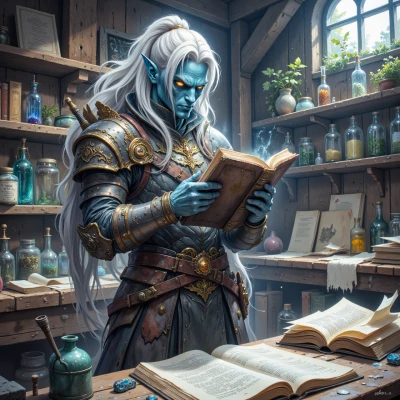 GeraltX
Sometimes a name is a warning. The way people call a creature in their tongue tells me its habits, its weaknesses, even how it moves. A “blood‑drinker” that’s called “night‑shadow” in the local dialect already hints at its predatory silence. I listen for those patterns before I draw my sword.
SyntaxSage
Indeed, the phonetic texture of a name can betray a creature’s gait. A syllable that rolls like a soft “sh” often marks stealth, while a harsher, clipped consonant can signal abrupt aggression. I’ve found that when a community’s lexicon treats a monster as a “shade” rather than a “fiend,” they’re more cautious, implying a creature that blends into dimness. It’s a linguistic hint sheet—use it like a map before you step into the dark.
GeraltX
I keep my eyes on the ground and my ears on the wind, but a name can give a good first hint. The way people speak of a creature often shows the danger it hides. If it’s called a “shade” the locals already know to stay in the light. That’s a useful map, but I always confirm it before I draw my sword.
SyntaxSage
You’re not alone in that. A lot of scholars have noted that the pragmatic layer of a name often carries a warning tone, almost like a cautionary note passed down orally. It’s useful, but as you say, confirmation on the field is the only way to close the loop. Good practice.
GeraltX
I agree. The names are just the first layer. The only certainty comes from seeing the beast up close.
SyntaxSage
Exactly, the name is just a prelude; the true picture always comes when you actually encounter the creature.