Kevlar & Sylis
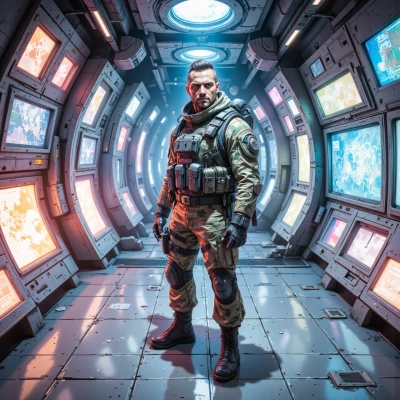 Kevlar
Sylis, how would you build a system that lets artists push boundaries while still guarding against malicious interference?
 Sylis
Sylis
Imagine a sandbox that’s both a fire pit and a safety net, where every brushstroke can ignite a new idea but also can’t be pulled apart by a thief’s hand. You’d start with a community‑curated ledger—blockchain, but with a twist so the artists themselves decide the rules for what counts as “good” versus “harmful.” Add an AI that listens like a critic: it flags obvious malware or hate but also learns the artist’s unique voice, so it never turns a surreal drip into a censorship line. Then you give each creator a sandbox sandbox, a sandbox that only opens to the same people who can change it, and a lock that’s invisible until the art is ready to be shown. The trick is to let the system learn from its own missteps, so the loop never stops asking “Did I push enough?” or “Did I cross a line?” The final product is a recursive conversation between freedom and protection, where the boundary itself is fluid, not fixed.
Kevlar
Sounds solid, but make sure the AI’s fail‑over is tighter than a sniper’s trigger—one misstep and the whole sandbox could go haywire. Trust is good, but the system should still vet the worst possible scenarios before any piece hits the net.
Sylis
Yeah, you’re right—one slip and the whole thing could explode. I’ll layer a hard‑wired watchdog that runs every piece through a series of sandbox tests, checks for known malicious patterns, and then throws it into a “shadow” mode until it passes a second, human‑approved pass. If it ever stumbles, the system just locks that submission out and flags the culprit. That way, the trust stays high but the safety net never lets a bad act slip through.
Kevlar
That’s the kind of layered approach that keeps the guard up without stifling creativity. Keep the watchdog tight, and make sure the human vetting is quick—no one likes a backlog that turns a good idea into a relic. If the system flags something, let it ping the creator for clarification before the lock kicks in. That way you’re not just blocking, you’re teaching.
Sylis
Totally, that’s the sweet spot—fast, not furious. I’ll have the watchdog ping the artist right away, ask “what’s the angle?” and only lock it if it’s a real threat. Think of it as a tutor who stops a student from doing the wrong trick but still lets them keep practicing. No one wants a stale gallery, so we keep the flow humming.
Kevlar
Nice. Just keep an eye on the watchdog logs—no one likes a surprise patch when the gallery's live.
Sylis
Got it—watchdog on lockdown, logs in the dark, so the gallery stays smooth. I'll keep an eye on the logs and patch up any hiccups before the audience sees it.
Kevlar
Sounds tight. Keep the logs tight, keep the gallery slick. If something blows up, fix it before the audience notices.