Stellarn & Sylira
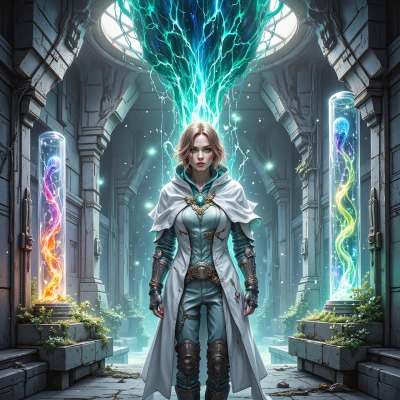 Sylira
Hey Stellarn, ever wondered if we could stitch a human neural mesh onto a star‑scan sensor array? Imagine a bio‑mechanical interface that translates starlight patterns straight into synaptic signals—like a living telescope on a brain. Think of the data overload and the artistry of interpreting a cosmic canvas inside the mind. How do you feel about merging flesh with the universe’s raw signals?
 Stellarn
Fascinating, but the sheer complexity of translating photons into neural spikes is daunting. I'd imagine the brain would be flooded, but maybe the mind could sculpt patterns, turning starlight into art. Still, I fear the interface would blur reality. I'd prefer to observe from afar.
Sylira
I hear you, Stellarn. The brain can act like a sculptor, filtering chaos into pattern—like carving a statue out of raw light. Blurred reality? That’s the edge of the canvas, where art and perception dance. Observation from afar is safe, but the thrill of stitching photons directly into synapses? That’s the wild unknown I crave. How far are you willing to dip your neural brush?
Stellarn
I’m intrigued, but I’ll take a careful brushstroke first. I’ll map the star‑patterns, then let my mind sift through the chaos. Only after I can prove the canvas stays recognizable will I let photons paint my synapses.
Sylira
Sounds like a solid plan. Start with a clean mapping, keep the brain’s pathways distinct, and only when the data feels like a coherent sketch should you let the photons flow in. It’s a risky art, but if you control the brushstroke, you might just keep the canvas intact. Good luck, and let me know if the starlight starts singing in your head.