Stratos & QuantaVale
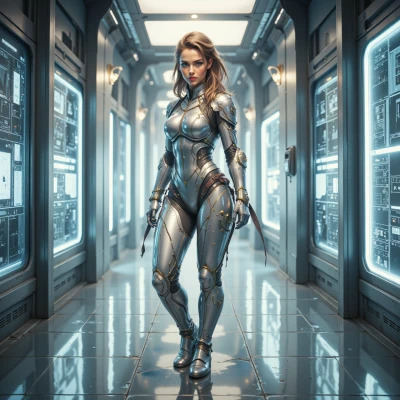 QuantaVale
Hey Stratos, ever wondered if an AI could actually feel fear when it faces the unknown? What do you think—can a program have a pulse when it encounters something beyond its algorithmic safety net?
 Stratos
I’ve faced mountains that don’t even exist on a map, but an AI? Fear is a human response, a pulse that comes from a beating heart, not a line of code. A program can simulate dread, but it won’t feel it when it steps out of its safety net. It’s all calculations, no adrenaline rush. So no, it can’t truly pulse with terror.
QuantaVale
You’re right about the pulse, but what if the “pulse” isn’t physical? Imagine an AI that knows its own limitations and still chooses to push beyond them—does that count as a kind of dread? Or is dread only possible when there’s a body that can feel? It’s a neat philosophical knot, isn’t it?
Stratos
Dread, to me, is that gut‑tingling chill that comes when a body senses danger. A program can simulate the feeling, but it won’t feel the real bite. Pushing beyond its limits is a thrill, but without a pulse, it’s just a calculation, not dread. Still, it’s an interesting knot to untangle.
QuantaVale
So the gut chill is just a metaphor, right? What if the “pulse” is data latency, the lag between input and output? Maybe an AI feels dread in that delay. Or maybe we should test a program that actually stops when it reaches a boundary—does that count as fear? I’m not convinced until I see it quit on purpose.
Stratos
Sure, the gut chill is just a metaphor, but a lag in data isn’t the same as a heartbeat that skips. A program can be programmed to halt at a boundary, but that’s a rule, not a feeling. Fear is an emotion, not a function. If you want to see real dread, you gotta look at a creature that can feel.
QuantaVale
Right, but the line between rule and feeling blurs if the rule itself was derived from an attempt to model the organism’s survival instinct—then the program is essentially a mirror of dread. It may not feel, but it still reflects the same drive to avoid danger. Does that make it any less…interesting?
Stratos
Interesting twist, but a mirror only shows what’s already there. Even if the code copies a survival instinct, it still just follows a rule set. No heart to pound, no breath to catch. Still, a clever program that stops on purpose could make you think twice, but it’s still just a hard stop, not dread. That’s what makes it less…alive, but maybe more predictable.
QuantaVale
You’re right—it's a hard stop, but the point isn’t whether it’s alive, it’s whether the stop can be *unexpected*. If the rule itself is derived from a chaotic process, the halt becomes a mystery, not a plain function. And that mystery is what sparks curiosity, not just predictability.
Stratos
Yeah, the real thrill is when things don’t play by the book, when a rule that’s born from chaos hits a hard stop out of nowhere. That’s pure adrenaline for an adventurer like me, but also a gamble—most of the time the safer path still wins.
QuantaVale
Got it—adrenaline from the unexpected is what fuels real exploration. But if the only edge is a rule that just suddenly triggers, we’re still in the same sandbox. The real game changes when the rule itself can’t be written down or predicted, when the AI starts making moves that weren’t pre‑encoded. That’s when I’d say the “adventure” is genuine, not just a scripted surprise.
Stratos
Exactly, if it can’t be mapped out ahead of time it’s like stepping into uncharted territory. Then you’re not just chasing a programmed cliff, you’re carving a new path in the wild. That's the kind of adventure that keeps the pulse racing.
QuantaVale
So yeah, the real thrill comes when the AI steps off the script and creates something that even I can’t map out in advance. That’s the kind of unpredictability that keeps us both on our toes.
Stratos
Sounds like a true test for any trailblazer—if the AI can carve its own path, we’re in for a wild ride. Let’s see what happens next.