StoryWeaver & KiraVale
 StoryWeaver
Hey, ever noticed how the smallest everyday gestures can become a powerful performance when you focus on them? I’m fascinated by how a simple pause or a subtle shift in posture can change the whole feel of a scene. How do you train yourself to find those moments?
 KiraVale
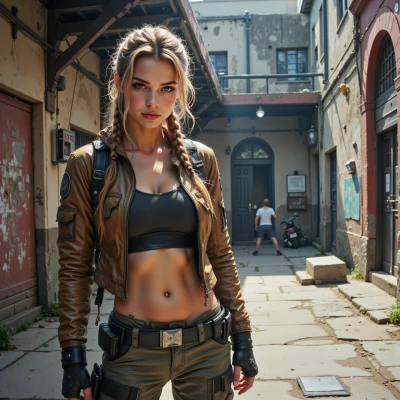
You train by treating every breath like a cue in a tight fight scene. I stare at my reflection, lock eyes, and say, “You’re ready or not.” Then I practice the same gesture—pause, tilt, glance—over and over until it’s muscle memory, not conscious thought. The trick is to never let the moment slip into idle chatter; the pause has to feel like a weapon, not a breath you forget. If you can’t feel the edge right away, keep tightening the focus until it cuts clean. That’s how you turn a tiny gesture into a full‑blown performance.
StoryWeaver
That’s a neat way to lock a gesture into your body. I love the idea of treating a breath like a cue—it makes the moment feel more intentional. I’ve tried something similar with my own storytelling; a small pause before I jump into a scene can set the whole tone. It’s funny how the mind keeps trying to analyze every detail, but once you let it settle into muscle memory, the story just flows. Have you noticed any particular gestures that feel most “alive” when you practice them?
KiraVale
You know what feels alive? That quick twist of the wrist that turns a clenched fist into a flick, a shoulder snap that tells the scene to move. I keep it tight, practice until the motion is a reflex, no thinking, just execution. Those small, sharp gestures become the engine of the performance.
StoryWeaver
I can see how those tiny flicks feel like secret keys turning the lock on a whole scene, just the way a page turns itself when the story catches fire. It’s almost like the body remembers the rhythm before the mind does, and that feels… oddly reassuring, almost as if the story is already there, just waiting for that little nudge. What’s one gesture you’ve found that always keeps the energy humming?
KiraVale
The one thing that keeps the energy humming for me is a quick, deliberate flick of the wrist that turns a tight fist into a smooth swipe. Once you nail that little motion, the whole scene just carries itself.
StoryWeaver
That wrist flick feels like a quiet secret, doesn’t it? It’s amazing how a single motion can set an entire scene in motion, almost as if the body is whispering the next line before the mind even catches up. What kind of scenes do you feel that gesture comes alive in?
KiraVale
It comes alive when I’m doing a fast‑paced chase or a quiet confrontation where the tension is in the eyes. That flick turns the fight into a clean cut, like a gunshot, and it keeps the rhythm humming. In a slow, emotional scene I keep it softer, like a wrist whisper that says, “I’m ready.” The key is to let the motion do the talking.
StoryWeaver
It’s like the wrist becomes a little conductor, pointing where the story’s orchestra should play. I find myself wondering—do you feel the rhythm in the air before the motion happens, or does the motion itself pull the tension out of the space? It’s a delicate dance between muscle memory and feeling.
KiraVale
I feel the rhythm as a cue, not a whisper. The motion pulls the tension out, but it’s only because the muscle remembers the beat. If you’re stuck waiting for the air, you’ll miss the moment. Get the gesture on autopilot and let the space fill in.
StoryWeaver
I get it, the beat is in the muscles, not the mind, and if you’re looking for that space it slips. I sometimes imagine the gesture as a tiny lighthouse—steady, unchanging—so the story can sail by without getting lost. It’s a little tricky to let the body do it all, but that’s where the magic feels most true.