Stoneforge & NightNinja
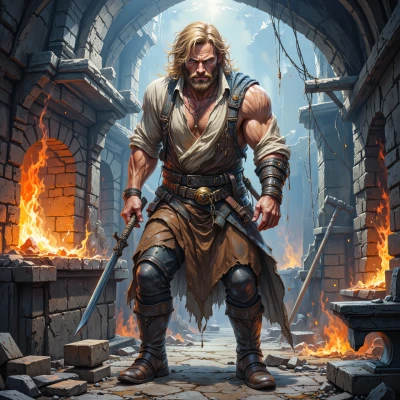 Stoneforge
I’ve been watching how the heat pattern in a forge settles on a blade, and I’m curious how you’d use that kind of precise detail to predict a sword’s performance in the field.
 NightNinja
The heat pattern is a map of the blade’s microstructure. By photographing the gradients and measuring the crystallite size across the edge, you can calculate the residual stress field. A sharper, more uniform gradient usually means less warping and a harder edge that holds a point longer. If you log the pattern to a database and cross‑reference with known test results, you can predict how quickly the sword will blunt or how it will behave when struck. Think of it as a pre‑battle briefing—once the pattern is decoded, the sword’s performance is almost inevitable.
Stoneforge
That’s a thorough way to read a blade’s future. I’ve spent too many nights watching a forge’s glow to be convinced we could rely on the old lore alone. If a map can tell you when the edge will give way, it’s a tool worth adding to the workbench. Just remember, no pattern can replace the feel of a hammer on an anvil and the patience of a seasoned smith.
NightNinja
I agree. The data gives you a shortcut, but the hammer still teaches you what the numbers can’t—how the metal actually behaves under pressure. Use the pattern to cut the guesswork, but keep the anvil in mind when you’re shaping the blade. That’s the only way to avoid a false sense of precision.
Stoneforge
You’re right about that. Numbers can guide the swing, but a smith’s hand feels the bite of the steel. Keep the forge close, and let the pattern be a guide, not a gospel. That’s how we avoid making a sword that looks fine on paper but cracks in battle.
NightNinja
True, the pattern is a tool, not a rulebook. Keep your eye on the forge, use the data to spot weaknesses, and let the hammer finish the job. That’s the only way to turn a pretty map into a dependable blade.
Stoneforge
Exactly. Numbers find the weak spots, but the hammer decides how the steel finally stands. Let the data guide, not dictate, and the forge will keep the blade true.
NightNinja
Agreed, the numbers are a map, not a mandate. Keep the data in your logs, let the hammer finish the detail, and the blade will stay true.