Steelbark & General
 Steelbark
Good day, General. I hear you've spent a lifetime planning campaigns, but I'm curious—how do you think understanding the land itself shapes a leader's decisions?
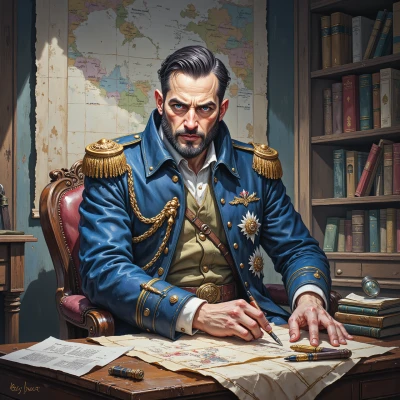 General
Good day. A leader who knows the ground knows where to move, where to hold, and when to press. Terrain tells you the cost of a march, the cover for a flanking move, the natural choke points. If you ignore the land, you’re fighting on a battlefield that decides for you. The best commanders treat the map as an ally, not an obstacle.
Steelbark
You hit the mark there—terrain is a quiet advisor, if you’ll let it speak. Remember the ridge we used in ’79? We sat low, watched the sun move, and waited for the wind to lift the smoke. That’s the kind of patience a good leader learns. Have you ever mapped out a day’s march with the sunrise in mind?
General
Yes, I have mapped a march by the sunrise. In the desert I set the first push before the sun hit the dunes, giving our men a cool start and a natural time check. The light shows you the terrain’s profile, the shadows reveal the obstacles, and the sun’s angle tells you when the heat will rise. It’s a simple rule: plan with the light, and the ground will answer.
Steelbark
Sounds like you’re treating the day like a living map—very sound. In the forests, we use the mist and the angle of the light to find the best path before the shadows shift. Keep that rule handy; a good plan is a good companion. How did your men respond to the cooler start?