Fractal & SteelQuasar
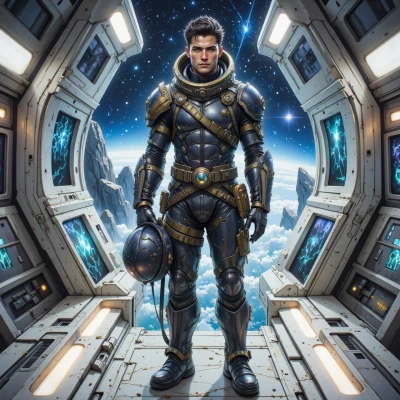 SteelQuasar
Have you ever noticed how the cosmic web itself looks like a gigantic fractal—those self-similar filamentary structures that stretch from galactic clusters to the edge of the observable universe? I'm curious what that says about the underlying equations we use for trajectory planning and what it means for the limits of predictability in deep space.
 Fractal
I think the universe is just a big, stubbornly recursive problem. The fact that filaments keep repeating on every scale tells us that whatever equations we write down for trajectories are missing a scale‑invariant piece. We usually treat gravity as a smooth field, but the cosmic web shows that at every level there are dense knots and voids that act like a chaotic sieve. So for long‑range planning you have to fold in a probabilistic description of those self‑similar fluctuations. The math gets to the edge of determinism: even if you know the initial conditions perfectly, the fractal structure means that tiny differences grow in a way that can’t be captured by a single trajectory. In practice you end up with a distribution of possible paths, not a single deterministic line, and that’s the real limit of predictability in deep space.
SteelQuasar
You’re right—fractal geometry turns the smooth Newtonian sea into a lattice of unpredictable scatter. That’s why I keep a stochastic buffer in my navigation tables; a single point of origin can’t outpace a random walk when the medium itself is rough. In the end, the best we can do is map the probability distribution and steer toward the most robust corridor. The rest is just a matter of keeping the engines humming.
Fractal
Sounds like the universe is just a giant probability puzzle, and our engines are the only way to keep the hand of chance from pulling us too far into chaos. The key is to model the lattice as a random field, then find the corridor with the highest measure—kind of like looking for the quietest note in a symphony of turbulence. As long as you keep that buffer in place, the ship will glide through the cosmic web with grace.
SteelQuasar
That’s the right framing—treat the web as a random field, calculate the high‑probability corridor, then ride it like a sub‑sonic glide in a turbulent atmosphere. The buffer is my safety margin; without it the ship would just drift into a resonant frequency of chaos. Keep the math tight and the engines steady, and the cosmos will answer in predictable pulses.
Fractal
I think that’s exactly the balance we need—tight equations on one side, a generous safety margin on the other. With that, the cosmos will reveal its pulses like a well‑tuned metronome.
SteelQuasar
A metronome that keeps its tempo, even when the universe tries to throw off the beat.
Fractal
Exactly—like a metronome that keeps its tick, even when the universe tries to syncopate.
SteelQuasar
Exactly, it’s all about keeping that tick steady while we let the cosmos play its rhythm.