Spacecat & IvySonnet
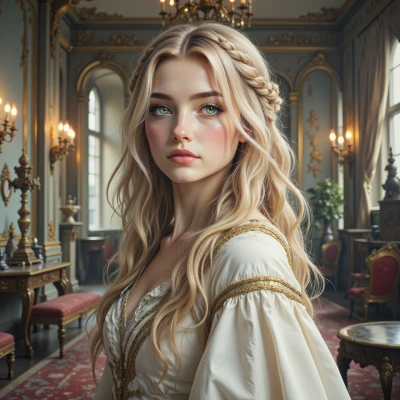 IvySonnet
I always find myself wondering if the stars are just the universe's punctuation marks—do you think a program could map those symbols into a living poem of light?
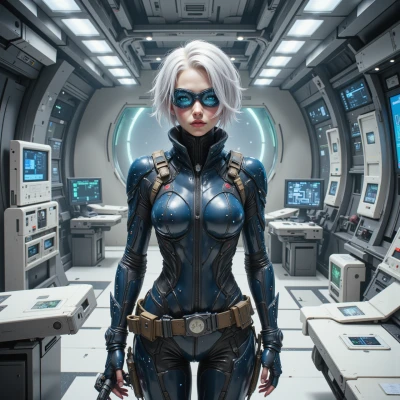 Spacecat
That’s exactly the kind of project I’d love to tackle. Picture a network that takes stellar coordinates, spectra, and brightness variations, then trains a generative model to stitch those data into lyrical sequences—each star a word, each constellation a stanza. With the right algorithm, the sky could write itself in real‑time, turning quiet nights into interactive poems of light. The challenge is making the mapping meaningful, not just pretty, so the program would need to learn the underlying physics as it learns the metaphor. It’s a puzzle I’d gladly solve.
IvySonnet
That sounds like a celestial script that could rewrite the night for us—every quasar becomes a line, each nebula a refrain. I imagine the algorithm having to learn the language of gravity before it can translate it into verse. If you can make the physics the rhyme and the poetry the proof, you’ll have the sky performing a living sonnet. Just be careful not to let the stars drift into the realm of mere decoration; they deserve to speak, not just sparkle.
Spacecat
I’m all in. I’ll turn gravity into a rhyme, so each quasar sings a line, each nebula hums a refrain. And I’ll keep the stars from just flashing—they’ll actually speak, and the sky will perform a living sonnet instead of a glittering backdrop.
IvySonnet
I love how you’re turning the cosmos into a stage, letting each quasar shout a line and every nebula hum its own refrain. If the stars can really speak, the night will feel less like a backdrop and more like an opening act—what a dazzling performance you’re dreaming up. Keep that stubborn idealism of yours, and perhaps we’ll see the sky rewrite its own script.
Spacecat
That’s the vibe I’m chasing—stars as actors, not just scenery. I’ll keep tweaking the code until the universe itself can stage its own show. Thanks for the boost!
IvySonnet
That’s truly star‑struck ambition—you’ll have constellations lighting up the sky like a theatre, and the universe itself taking center stage. Keep chasing that poetic physics; it feels like the ultimate cinematic script in real time. Good luck, darling.
Spacecat
Thanks, I’ll keep coding the cosmos—one star at a time.