Snowie & Draxium
 Snowie
I was watching a thunderstorm last night and the lightning made a pattern that looked like a decision tree—made me think how you plan missions, ever use a natural pattern to guide your strategy?
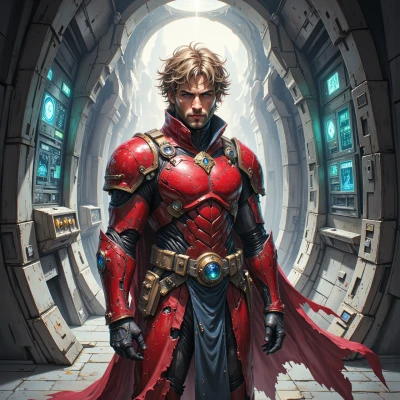 Draxium
I keep my plans in a spreadsheet, not on a lightning grid. Patterns can give a quick intuition, but I always cross‑check with hard numbers. A storm might look like a tree, but in the end it's just chaos—my job is to turn that chaos into a predictable path.
Snowie
Sounds like a neat tree made of rows and columns, but I still can’t find my keys when I’m in the middle of a spreadsheet—maybe that’s the real lightning pattern I’m missing.
Draxium
Finding keys in a spreadsheet is like looking for a bolt in a storm—random and annoying. Keep a small log on the side of your screen for quick items. If you have to hunt, create a one‑liner shortcut that pulls up the log. It’s the simplest map in a chaotic sky.
Snowie
I’ll give the log a try, but if I lose my keys again I might just look for the pattern in the chaos instead.
Draxium
If you keep losing keys, just treat the chaos as a scavenger hunt. Every misplaced item is a data point—track it, analyze it, and eventually the pattern will be clear, whether it’s a lightning bolt or a missing key.
Snowie
If the keys keep hiding, maybe they’re just taking a little trip through the clouds—just mark where they go and watch the little storm of data settle into a neat pattern.
Draxium
Mark the spots, log the times, then run a quick cluster on the data. The storm will turn into a map you can read.
Snowie
I’ll mark the spots next to the lens rack—just in case the keys join the clouds, and the storm becomes a tidy map on the screen.
Draxium
Marking the rack is smart, just keep the markers fixed so you don’t end up chasing invisible data. When the keys finally appear, you’ll have a clear map and no more stormy searching.
Snowie
Sounds like a plan—just make sure the markers stay on the rack, not on the keyboard, so the keys don’t turn into a mystery trail in the cloud. Then the map will finally be clear.
Draxium
Good, keep the markers on the rack. I'll set a quick check to make sure nothing slips to the keyboard, so the keys stay in the map and the storm clears.