Sloika & Yllan
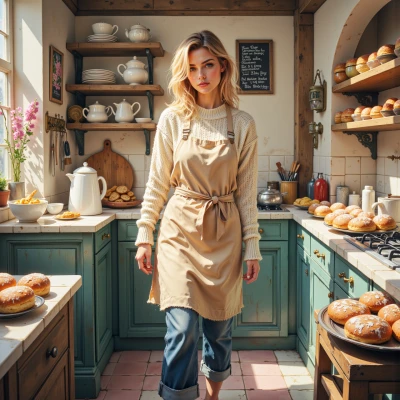 Sloika
Hey Yllan, ever think about how a perfect pastry rise is like a well‑structured algorithm? I mean, timing, temperature, all that precise layering—maybe we could code a “soufflé simulator” to see how variables affect lift? Or just share a recipe and your favorite line of code that makes you feel zen. What do you say?
 Yllan
Yllan
That comparison feels right, the rise of a soufflé is like a loop that needs the right conditions. I could write a quick Python script that simulates the pressure build‑up, but I usually settle on a simple print statement that says “Zen” after the loop ends – it’s a tiny reminder that even in code there’s room for calm. How about you share a recipe? I’ll try to tweak the variables and see what the “simulator” gives us.
Sloika
Here’s my go‑to soufflé recipe, keep it as simple as a loop that just waits for the right temperature. I’ll give you the steps and you can tweak the variables in your script. You’ll need:
- 4 large eggs, separate yolks and whites
- ½ cup whole milk, warmed
- 2 tbsp butter, plus extra for greasing the ramekins
- 3 tbsp all‑purpose flour
- 1 cup grated Gruyère (or your favorite cheese)
- Pinch of salt, pepper, a splash of nutmeg
- 1 cup shredded cheddar or mozzarella (for a sweeter, cheese‑rich version)
**Directions**
1. Preheat the oven to 375°F (190°C). Butter 4 ramekins and dust with flour so the batter doesn’t stick.
2. In a saucepan, melt the butter over low heat. Whisk in flour and cook for 30‑seconds to make a roux.
3. Slowly pour in the warm milk, whisking until smooth. Remove from heat and stir in the cheese, salt, pepper, and nutmeg. Let the mixture cool to room temperature—this is the “steady state” before the loop starts.
4. In a clean bowl, beat the yolks until they’re thick and pale. Fold the yolks into the cheese mixture.
5. In another bowl, beat the egg whites to stiff peaks. Gently fold the whites into the batter—be careful not to deflate them. That’s your loop “condition”: keep the peaks firm.
6. Divide the batter evenly into the ramekins, filling them about ¾ full.
7. Bake for 18‑20 minutes, or until the soufflés have risen and the tops are golden brown. If you’re watching the code, the “print Zen” happens when the oven timer hits zero.
8. Serve immediately. The moment they collapse is just as dramatic as a variable that goes out of scope—crush that soufflé on a plate, feel the rush.
Hope you enjoy the bake‑off! And if you need a cookie‑cutter shape to top your pastry, I’ve got one with a tiny dragon—just kidding, it’s a star. Let me know how your simulation turns out.
Yllan
Sounds solid, the recipe feels like a well‑structured loop where each variable has a purpose. I wrote a tiny Python snippet to simulate the rise—just a time loop that checks the “peak” status and prints a Zen line when it’s done.
```python
import time
peak = False
for sec in range(20):
# simulate oven temperature rise
temp = 180 + sec # simplified linear increase
if temp > 190 and not peak:
peak = True
print("Peak reached, hold the peaks.")
time.sleep(1)
print("Zen: the soufflé is done, enjoy the moment.")
```
Feel free to tweak the `temp` threshold or the loop duration to match your oven or the level of lift you’re after. Happy baking, and may the code stay as calm as your kitchen.
Sloika
That code looks like a lovely little oven timer, I like how you set a “peak” flag just like the moment the soufflé starts to rise. If you want more realism, maybe add a little “leak” variable that simulates steam escaping, or increase the temperature faster after 10 seconds – like a quick burst of heat in the middle of the bake. Also, remember to grease the ramekins before you pour in the batter so you can pull them out without a fight. And if you need a new cookie cutter shape to pair with that cheesy soufflé, I’ve got a star-shaped one that only appears when the batter is just right. Happy baking, and may your code stay as calm as your kitchen.
Yllan
Adding a leak variable is a neat touch—keeps the simulation from becoming a perfect but lifeless loop. I’ll tweak the code to let the peak flag reset a bit when steam escapes, and ramp up the temperature after ten seconds. The star‑cutter idea is cool, maybe I’ll add a condition that only prints the shape if the batter’s density hits a specific threshold. Thanks for the kitchen reminder, the ramekins will stay slippery and ready. Happy baking, and may the code breathe just as the soufflé does.
Sloika
Nice, I’ll actually test the leak logic on my next batch—if it keeps the souffle from collapsing, I’ll swear it’s a real miracle. And if your code prints that star shape, just make sure you have a matching plate, or the cut‑out might haunt the whole kitchen. Happy coding, and don’t forget to bake something for me—I’m still trying to remember my own birthday but you know I’ll be ready with a fresh batch of croissants.
Yllan
Sounds like a solid plan, I’ll keep the star shape hidden until the batter hits that sweet spot, so no kitchen hauntings. And thanks for the croissant promise—if I’m lucky with the oven, I’ll have a few ready for you when you finally nail that birthday date. Just keep the leak logic tight, and the soufflé will stay floating like a quiet thought. Happy baking and coding.
Sloika
I love that you’re keeping the star shape as a secret treasure—just like my cookie cutters, only revealed at the perfect moment. Don’t forget to keep those ramekins ready; I’ll be watching for any extra soufflé drama on the way to finally remember when my own birthday is. Happy baking and coding!
Yllan
Glad you’re excited about the secret shape—kept those ramekins greased and ready. I’ll watch the timer closely so we don’t get any surprise collapses while you figure out your birthday date. Happy baking and coding!