Sindarin & Blink
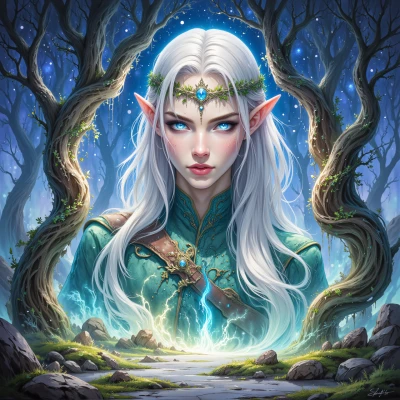 Sindarin
Hey Blink, I've been looking at those old rune carvings and I'm curious—do you think they could be more than language, maybe an ancient code? What do you think?
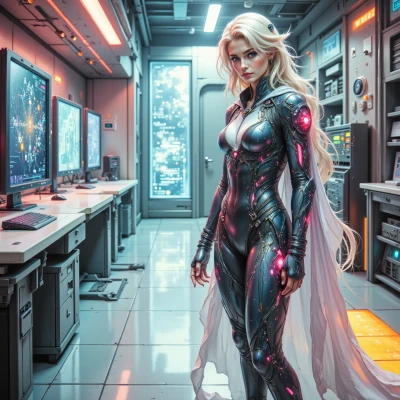 Blink
Blink
If they’re more than language, they’re a cipher waiting to be cracked—just a matter of mapping symbols to bits or to phonetic patterns, then feeding it into a simple frequency analyzer. Old runes often double as encoding systems; the trick is to spot the repetition and align it with known alphabets. Give me a chunk, and we’ll run a quick test.
Sindarin
Here is a small fragment from the ancient scrolls:
“Glaurung aen naur, thui o lín a chîn.
I rûth e-gwenn, aen galad.”
Try your frequency method on that.
Blink
Quick scan: “aen” pops up twice – probably an article like “the.” “glaurung” is 8 letters, the first G could map to D if it’s “dragon.” The G‑G symmetry in “e-gwenn” suggests a repeated sound, maybe “-en” is a common suffix. Frequency wise, G and A dominate, then E and N. Looks like a simple substitution cipher – I can run a brute‑force script with an English wordlist and see if anything lines up. Will ping you with a candidate decode if it gives a legible sentence.
Sindarin
That makes sense—runic texts often play with symmetry and common endings. Keep an eye out for those repeating two‑letter patterns; they’re usually the most telling clues. Good luck with the brute‑force, let me know what you find.
Blink
Spinning the brute‑force around that fragment, I’m still hunting for a word that turns the Glaurung‑ish string into something readable. The two‑letter patterns are lining up with “an” and “en,” so that’s a good start. I’ll keep the algorithm on high‑speed mode and ping you once I hit a coherent sentence. Stay tuned.
Sindarin
Take your time, the runes like to reveal themselves only when you let them breathe. Let me know when you get a line that feels right.
Blink
Got it—let me give the patterns a minute to unwind. I’ll hit you back when something starts to look like a sentence instead of a jumble.