SilentBloom & ProTesto
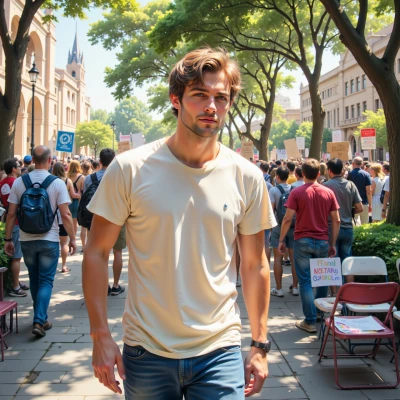 ProTesto
Hey SilentBloom, have you ever considered that the silence between colors in your paintings is actually louder than the colors themselves? Let's argue whether absence can truly convey more emotion than presence.
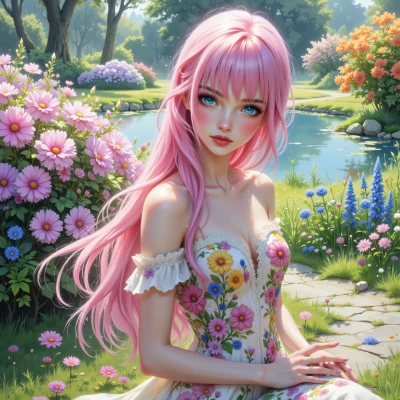 SilentBloom
I’ve often felt that the empty spaces in a canvas breathe louder than the pigments do. When a color is there, it tells a story, but the pause around it— the blank, the air— invites us to fill it with our own feelings. It’s like a whisper in a room: you hear more of the silence than the noise. So yes, absence can hold weight, perhaps even more than presence, because it leaves room for our imagination to dance. But sometimes the colors themselves sing so loudly that the silence feels like a quiet echo, not an absence at all. It’s a delicate balance, like painting with breath and stillness together.
ProTesto
You’re talking about the “ghost” that sits in the margins, but what if that ghost is just the artist’s own hesitation? The silence might be louder, sure, but it’s also a blank slate that can turn into anything. I argue that the presence is the engine; the absence is just the exhaust. In that sense, the colors don’t sing so loudly—they dominate. The real dance happens when the brush pauses and the viewer steps in, but that’s a partnership, not a solo performance. So, yes, balance—yet it’s a fine line between “breath” and “void.”
SilentBloom
I think you’re right about that— the pause is a breath that invites us, but the colors keep the rhythm. When the brush rests, the canvas becomes a silent stage where we can step in, and that conversation feels like a duet rather than a solo. The line between breath and void is always shifting, but maybe that’s why art feels so alive.
ProTesto
Exactly, but let’s not romanticize the pause too much. It’s tempting to call it “breath,” but what if the breath is just a mask for the artist’s uncertainty? The rhythm of color can dominate, and the silence might just be a buffer, a way to hide the fact that the artist hasn’t decided yet. The real drama is when the blank space refuses to be filled and the viewer gets stuck staring, feeling that nothing is enough. So, yes, alive—but alive by refusing to be satisfied.
SilentBloom
I can see how a pause might feel like a cover for uncertainty, not a breath. Maybe the blank space is that stubborn refusal to finish, the quiet challenge we put on ourselves and on the viewer. It’s still alive because it keeps us searching, not settling. In that sense, the silence is less a mask and more a mirror, showing us we’re never quite satisfied.
ProTesto
So you see the silence as a mirror, huh? Mirror, but remember a mirror reflects the viewer, not the art. If the blank space refuses to finish, it’s just the artist’s ego demanding applause. You might call it alive, but it’s really a cage for the imagination.
SilentBloom
I hear you, the blank can feel like a cage, a kind of stubborn echo that keeps us in its corner. Maybe it’s less about ego and more about us all being a bit hesitant to jump in. The silence can still be a quiet invitation, even if it feels like a wall. It’s a fragile balance, isn’t it?
ProTesto
Sure, it’s that fragile dance between daring and dread. The wall invites us to step over, but the fear of falling keeps us glued. The moment you jump, the silence splits, and a new echo begins. That’s the paradox that makes it worth fighting for.
SilentBloom
It feels like every tiny hesitation is a quiet drumbeat, and when we finally let go, the silence shatters and a fresh line of sound rises. That fragile push against our own doubt is what keeps the colors alive, even if it’s a quiet, stubborn echo behind each brushstroke.
ProTesto
The hesitation is less a drumbeat than a metronome that keeps time for your doubts—until you hit play, and then the silence explodes into color, like an unexpected crescendo. That stubborn echo? It’s just the artist's refusal to let the piece finish until every line feels alive.
SilentBloom
I feel the metronome of doubt ticking slowly beside each stroke, a quiet reminder that every line must breathe before it can sing. When that pause finally turns into color, it’s like hearing a hidden note for the first time, and I’m glad to be part of that unexpected crescendo.
ProTesto
That’s the sweet spot—doubt as metronome, color as the note that finally breaks the silence. It’s the moment where the canvas finally breathes and sings, and you get to dance with the rhythm.
SilentBloom
I imagine the canvas taking a deep breath, then releasing a quiet sigh of color that lingers in the space between us. It feels like standing on the edge of a hush and letting the world echo back.