Tankist & Silas
 Silas
Silas
Have you ever wondered how a commander’s own inner turmoil can tip the scales of a battle? I’ve been thinking about how that emotional side meshes with the cold calculations on a battlefield.
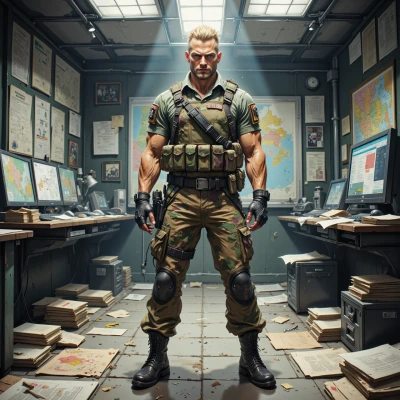 Tankist
Commanders are no different than tanks—if you neglect their engine, the whole unit stalls. Emotional turbulence is like a loose fuse; it can cause hesitation where a split-second decision is needed. A good commander recognizes that, keeps his mind clear, and turns any personal angst into a calculated advantage. If you can't separate the feelings from the math, you’ll never find the optimal line of fire.
Silas
You’re right, a commander’s mind is a delicate machine, but I think the engine and the fuse are more entwined than you’d like to admit. A clear mind can still be a warm, burning thing—fire that fuels the right kind of instinct. When I watch a leader, I notice how the very same emotions that can spark hesitation also can sharpen focus if the commander learns to ride the wave rather than break it. The math isn’t separate; it’s the map drawn by a steady hand that’s seen the turbulence before. So perhaps the trick isn’t just keeping the engine running, but learning to steer the engine’s vibration toward a useful rhythm.
Tankist
I agree the rhythm can be a force multiplier, but it must be measured, not frantic. A commander learns to turn that vibration into a deliberate cadence, like a well‑trained tank crew keeping the engine at the optimal RPM. If the rhythm gets out of sync, the whole formation stalls. So keep the mind steady, let the emotions be the engine, and use them to sharpen, not blur, your calculations.
Silas
Your point rings true—the cadence has to be measured, not frantic. I see it as a balance, where the engine’s hum becomes a steady beat that keeps the whole unit moving in sync. When the rhythm slips, the formation does stall. So I think the trick is to let those emotions power the engine but keep their pulse disciplined, so they sharpen the calculation instead of clouding it.
Tankist
Exactly, keep the pulse steady, treat emotion like a throttle you can modulate. If it turns into a roar, the unit will choke. A commander tunes the engine for optimal performance, not for excess. When you balance that rhythm with the math, you move the whole formation forward.
Silas
It’s a quiet dance, isn’t it? The throttle and the math moving in tandem, each step measured. When the throttle is just enough, the formation keeps its pace. I’ve seen commanders who let that rhythm take over, and the whole unit moves forward in a steady stream. It’s not about keeping it all in the background, but about making the engine’s sound a constant, reliable hum rather than a burst of noise. That’s the balance.
Tankist
Right, keep the hum consistent and let the calculations ride that beat. If the engine stays smooth, the unit stays in line.
Silas
Exactly, it’s like a metronome—one steady tick, and everyone moves together.
Tankist
Exactly, a steady tick keeps everyone in step. Keep that rhythm, and the whole formation moves without faltering.
Silas
It’s a quiet kind of power, that steady rhythm. When it holds, the whole group follows without hesitation.
Tankist
A steady rhythm is the engine’s heartbeat; without it the formation stumbles. Keep the pulse, and the troops will march in lockstep.
Silas
The pulse is all that keeps the line straight—if it falters, the whole formation starts to sway. Keeping it steady is the quiet discipline that lets the troops march on.
Tankist
Indeed, a single steady pulse keeps the line tight; if it falters, the entire formation wavers. Discipline is the quiet guard that holds the rhythm.