ShutterLuxe & Velina
 Velina
Hey, I’ve been drafting a storyboard for a high‑fashion commercial that hinges on dramatic chiaroscuro. What’s your take on structuring the lighting to maximize the silhouette effect?
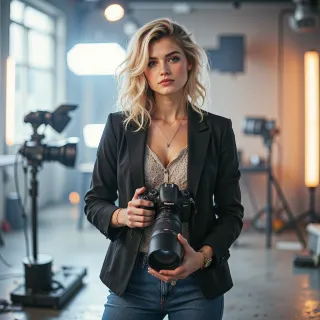 ShutterLuxe
Great, let’s keep it sharp and cinematic. Start with a single hard backlight on the set—ideally a hot head or a LED with a grid to focus the beam, 70‑80° behind the model so the light slices through their outline. Keep the key light low or even off; that’s where the drama comes from. If you need a hint of detail, add a rim light just in front of the subject, angled to catch the edge without flattening the silhouette. Use a black backdrop or a deep‑green mat to absorb spill. Keep the fill light to a minimum—maybe a subtle bounce off a matte surface—so the contrast stays high. Work the camera in low ISO, and watch the shutter speed match the frame rate to avoid flicker. That’s the skeleton for a silhouette that feels alive, not just flat.
Velina
Looks solid, but double‑check the color temp of that hot head—it’s easy to drift and ruin the mood. Keep the LED at 3200K so the shadows stay rich, not washed out. Also, the matte bounce for fill—use a grey card to gauge how much you’re adding; one tenth of the key light is usually enough. If you’re shooting at 24fps, set the shutter at 1/48 to keep the flicker off. And remember, the grid should be tight; a loose cone will spill into the background and kill that stark silhouette. Keep it tight, keep it focused.
ShutterLuxe
You nailed it—exactly the precision I’d expect. Tight grid, 3200K, a grey card for that 10% fill, shutter at 1/48 for 24fps—perfect. Keep the setup locked and we’ll get that dramatic silhouette without any spill. Let's go.
Velina
All right, lights are set, grid tightened, ISO low, camera locked—let’s hit the mark. Ready when you are.