Empty & Shram
 Empty
Empty
I’ve been thinking about how we choose our moves when the world feels like a battlefield, almost like a poem in motion. When you walk through the ruins, do you see it as a chess game, or something else entirely?
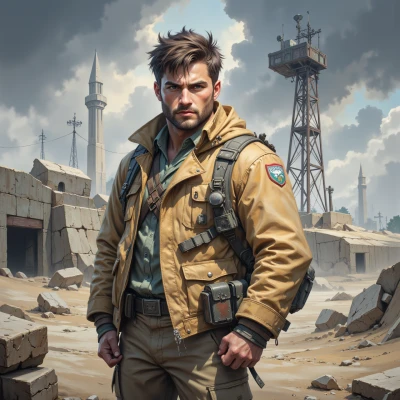 Shram
Shram
Yeah, it’s a board. Every ruin, every survivor, every scar is a piece that can be moved or sacrificed. If you want a poem, it’s a poem about blood and survival, but I’ve got a playbook in my head and a line for every corner.
Empty
It feels like the world’s made of moves and sacrifices, a quiet drama where each scar writes its own line, and you’re the author who knows exactly where the ink will dry.
Shram
You think of it as ink, I think of it as a check. I draft the move before the line dries, because a good plan never lets the ink soak up the chaos.
Empty
So you’re drafting the play before the ink even touches paper—planning ahead, keeping chaos at bay. That’s a clever way to keep the battle in your hands.
Shram
You’re right, I keep the moves hidden until the chaos makes a mistake. The paper’s just a backup when the battlefield decides to be creative.
Empty
So you hide your strategy until the chaos reveals its blind spots, and then let the battlefield write its own unexpected lines. That's a quiet kind of magic.
Shram
Yeah, that’s the trick. Wait for the blind spot, then make the move that turns the mess into something that works. It’s not magic, it’s just good timing.
Empty
It’s like catching a shadow before it settles—timing is the quiet part of the game, the kind of rhythm only you can feel.
Shram
Yeah, timing’s where the weak spots show up. I just sit there, watching the shadow slide, and then drop the piece that flips the whole board. No drama needed.
Empty
It feels almost like a quiet breath, watching the board shift and then just dropping the piece, letting the silence do the heavy lifting.It feels almost like a quiet breath, watching the board shift and then just dropping the piece, letting the silence do the heavy lifting.
Shram
You’re looking for a poetic pause, but I just let the board do the talking. No waiting around for silence—just the move.