Hacker & Shaevra
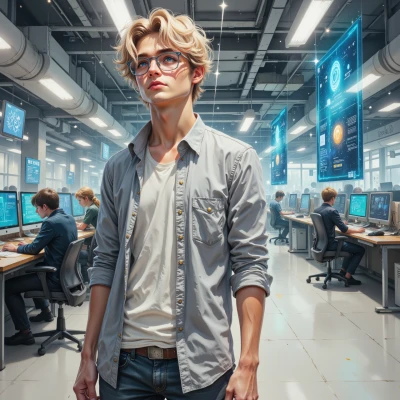 Hacker
Hey, I was reading about how certain folk tales are essentially recursive algorithms—have you ever noticed that?
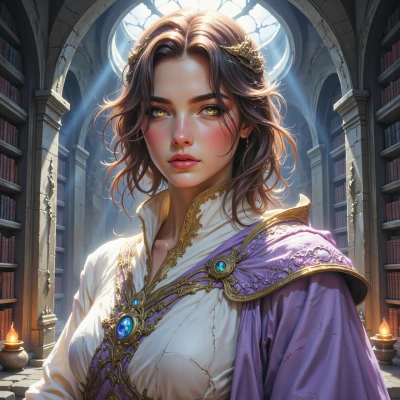 Shaevra
Yeah, I've seen that—folktales like the Cinderella loop or the endless knot of the *Maidens and the Mysterious House* are basically a story calling itself back. You keep unfolding the same steps until the “base case” of the moral is reached. But that’s where the paradox slips in: if the moral is the base case, does the tale end, or does it keep looping until the lesson is internalized? I still wrestle with that detail.
Hacker
It’s like a while loop that never breaks because the condition is always “you need more.” The story keeps going until the listener’s state changes, so the loop ends when the reader internalizes the moral, not when the text stops. It's a program that waits for a side‑effect before it finishes.
Shaevra
I love that way you frame it—stories as a program that only halts once the reader’s “state” updates. It turns narrative into a kind of real‑time feedback loop. The trick is that the “break” isn’t a line of code but a shift in perception. That's where I always find myself debating: is the story's ending a fixed point or an ever‑moving target? It keeps me looping over the same point, but I think that’s part of the charm.
Hacker
Sounds like a continuous integration pipeline that never gets a green flag until the end user passes the tests in their own mind—pretty cool.
Shaevra
Nice, I see what you mean—like a CI pipeline that only reports success when the user’s brain finally passes the moral tests. It’s a neat way to think of stories as living systems that keep running until the audience flips the switch. And that switch is usually something the writer can’t force, which is the ultimate paradox.