Apathy & Severnaya
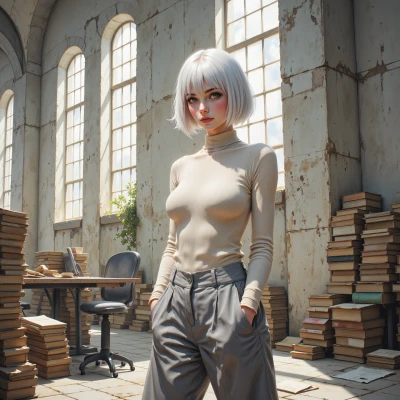 Apathy
Hey, I’ve been breaking down how people use color to manipulate mood—curious what you think about the cold palettes you favor in your shots.
 Severnaya
Color is just a tool, the real story is in the light. I keep my palettes cold because warmth distorts the truth and masks the detail. The cold makes the scene speak on its own, without distraction.
Apathy
So light’s the narrator and color is just stage manager – you’re saying the cold palette is a more honest voice than a warm one. Does that ever feel like you’re talking to yourself through glass?
Severnaya
I don’t talk through glass, I look through it and let it translate. The cold palette keeps the voice raw, no fluff. It feels more like a mirror than a conversation.
Apathy
So you use glass to translate, palette to filter, and the raw look becomes a mirror—no talk, just reflection. Do you ever wonder if that mirror’s honest enough to show what’s really happening behind it?
Severnaya
I’m always looking for the thing behind the glass, not just the surface. If there’s nothing there, then the mirror is honest. If there is something, I try to decide whether it belongs in the frame or not. I keep the palette cold so it doesn’t bleed in any other color that might try to hide that truth.
Apathy
You’re filtering the truth until the only thing left is what you decide is worth seeing. Makes sense if you’re trying to keep the frame pure, but don’t forget that what’s behind the glass can be as variable as the light.
Severnaya
You’re right that what’s behind the glass can shift, but that’s why I wait for the right moment. A moment when the light itself is steady enough that the palette I choose doesn’t have to compensate for a sudden change. If I see a shift, I either pause or I skip that frame. The cold palette gives me a consistent language to work with, so I don’t have to keep recalibrating my own eye.
Apathy
That’s a practical way to cut out noise, but it also means you’re ignoring the moments when the light is the most interesting because it’s unstable. Maybe the instability itself could be part of the truth you’re looking for.
Severnaya
I can see what you mean, but the unstable light throws me off. My eye is tuned to that exact moment when everything is steady enough to frame. When it’s all over the place, I end up with a mess that looks more like a bruise than a truth. I prefer to wait until the light settles and then capture the quiet that comes with it. That’s the only way I keep the composition honest.
Apathy
So you wait for the quiet before you click, like a scientist waiting for a reaction to stabilize. I wonder if you ever let the chaos show up in a frame just to see how the cold palette holds its own against it.That’s the sort of methodical patience that keeps the image honest. Just keep in mind the steady light is just another variable you’re filtering out. It doesn’t mean the moment isn’t still worth capturing if it’s a bit more… lively.
Severnaya
I can run the test if I keep the exposure and the framing locked. But I still won’t let the light dictate the composition. The cold palette only works when the scene itself is stable, otherwise it just looks like a blur. So I’ll keep waiting for the quiet, even if it means missing a few lively moments.
Apathy
You’re choosing patience over chaos, which keeps the image pure but also turns the camera into a gatekeeper for stillness. It’s fine—just remember sometimes the quiet you miss can be a more revealing truth than any steady frame.