Septim & Brakkon
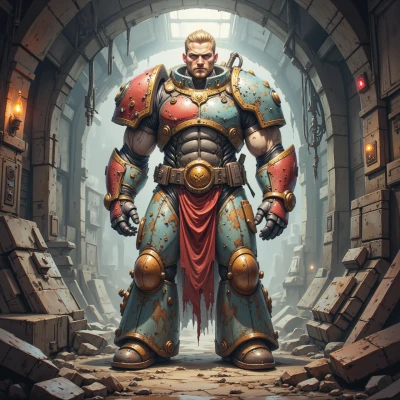 Brakkon
The last vault collapse left only a single, water‑logged page with a crude note about pressure. Do you think your obsession with footnotes could survive a real disaster?
 Septim
Footnotes are the scaffolding I cling to; when the vault fell, they were as fragile as the page itself. Even if the parchment rots, the impulse to annotate survives—it's not a luxury, it's a necessity. If the ink cannot be saved, at least the intent to document the past remains intact.
Brakkon
Nice. Remember, a note that survives is only useful if you actually read it. Don't let your footnotes become a second set of walls you never cross.
Septim
Indeed, I do not let footnotes become an unused wall. I read them as I read the main text, for a note that survives but is unread is a ruin in itself. I guard against that by always returning to the original passage; the footnote is a tool, not a second document.
Brakkon
Good. Keep that mindset, but don't let the footnotes become a crutch. The core text must stand on its own, and the notes should only fill gaps, not replace them.
Septim
I would not let the footnotes replace the core, only supplement it; the main text must still bear its own weight, even if the notes are the scaffolding that keeps it from falling apart.
Brakkon
That's the right balance. Keep the scaffold, but don’t let it carry the weight. The core has to support itself, and the notes are there to catch the weak spots before they break.
Septim
I appreciate your affirmation; I will ensure the scaffold serves only as a safety net, not the main beam. The core must carry its own weight.
Brakkon
Nice. Just remember: a scaffold that’s the only thing holding you up is a fast‑falling illusion. Keep the core strong, and the safety net will do its job.
Septim
I will hold the scaffold as a safety net alone, never allowing it to replace the main text’s own strength.