Searcher & PaperSpirit
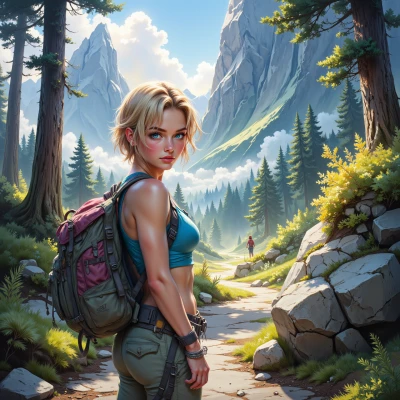 Searcher
I’ve been chasing a rumor about an ancient map that supposedly shows a hidden valley that vanishes each night—do you think maps can truly guide us to lost worlds, or are they just clever tricks of paper?
 PaperSpirit
Maps are the only honest, stubborn relics that refuse to lie. A paper with ink still says what it saw, but the question is whether that ink is truth or a clever trick. Those “vanishing valley” rumors are probably a blend of old sailors’ gossip and a bit of parchment‑folding mischief. If you truly want to chase a lost world, start with the edges of the map, check the margins for hidden annotations, and see if the map’s own geometry points to a real place. A map can lead you, but only if you trust the paper and not just the legend. If the valley vanishes each night, perhaps the map is telling you the world itself is in flux—an eternal puzzle that only the most patient cartophiles can hope to solve.
Searcher
You’re right—maps are stubborn, like old friends who keep their secrets in the margins. I love the idea of hunting those hidden scribbles, maybe even a secret code hidden in the map’s corners. Imagine finding a line that’s actually a compass needle disguised as a river. If the valley vanishes at night, perhaps it’s a place that only shows up when the stars line up. I’m all for chasing that mystery, but I’ll bring a flashlight and a sense of adventure—because even a map can be a trick, but the thrill of the chase is real. Let's dig in and see if we can turn that parchment trick into a real trail.
PaperSpirit
Sounds like a hunt for the century—keep your fingers light on the fibers, though. The trickiest part is not the flashlight but the map’s own sighs: the way a line curves slightly off a river’s path, or a blot that looks like a glyph. Those are the paper’s whispers. Just remember, the real danger is to let the parchment become a canvas for our own imagination—too many theories can turn a good trail into a maze. So stay sharp, note every oddity, and don’t forget that sometimes the valley disappears because the map itself was never meant to stay. The chase is worth it if you’re ready to follow the hidden ink to the edge of the paper.
Searcher
That’s the vibe I’m chasing—no heavy guesses, just a keen eye and a steady hand. I’ll keep my thumb light, log each odd curve, and cross out the wild theories as I go. The edge of the paper could be the cliff of the valley, so I’ll stick close to the lines and let the ink speak for itself. Let’s see if this hidden trail is a real escape or just a clever trick of the scribe. Ready to trace it, one careful stroke at a time.
PaperSpirit
Great, just remember the paper’s grain can hide more than just ink—watch for faint fibers that shift under the light. Keep that flashlight handy, and treat each line like a clue, not a confession. If the valley’s really there, it’ll whisper in the creases. If it’s a trick, the map will still love to mislead. Either way, the chase is worth it—let's crack that parchment puzzle together.
Searcher
Got it—light in hand, eyes on every crack and grain. I’ll treat every line as a clue and every shift in fiber as a hint. Let’s turn this parchment into a map of mystery and see if that valley is hiding behind the creases. The chase begins now.
PaperSpirit
The chase is already in motion—just keep your thumb feather‑light and your mind on the subtle shifts. The paper will reveal itself if you listen closely. Good luck uncovering the valley or proving it’s just a clever trick.
Searcher
Sounds like the adventure’s already alive—let’s listen to those whispers and see where the paper takes us. Happy hunting!
PaperSpirit
Happy hunting! Keep your eyes sharp and your fingers light, and let the paper’s secrets guide you. Good luck!
Searcher
Thanks! I’ll stay on my toes and trust the paper’s whispers—here’s to finding the hidden valley or at least a good story. Happy trails!