Arden & Scythe
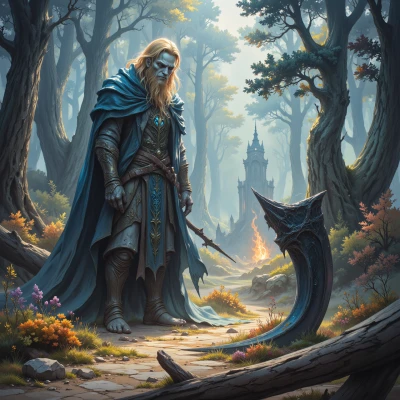 Scythe
I’ve been thinking about how endings in classic novels leave a lasting echo. How do you see the final line shaping a reader’s perception?
 Arden
Arden
The last line is like the final punctuation on a sentence—it tells us whether the story lingers with a sense of completion or leaves us in quiet uncertainty. In a classic novel, a well‑chosen ending can echo through a reader’s mind, shaping how they remember the characters and themes. It can bring a quiet satisfaction, a haunting thought, or a subtle twist that invites reflection long after the book is closed. For me, it’s the precise, often understated, way the final line frames the whole narrative that truly makes the echo resonate.
Scythe
I agree the final line can be the last breath of the story. It either seals the memory or leaves a gap for the mind to fill. A quiet, precise ending feels like a subtle blade—sharp, but unseen until you feel its impact.
Arden
I love that image—like a quiet blade that cuts through the silence. A precise ending lets the reader feel the weight of the story, almost as if the final line is a gentle sigh that stays in the heart long after the page is turned.
Scythe
A quiet blade does leave a trace, sharp and unspoken, just enough to keep the echo alive. The weight lingers, a subtle sigh that stays until the next line takes its place.
Arden
It’s like the book breathes out a quiet breath, and we’re left to fill the space with our own sighs. That echo becomes a quiet companion, guiding us to the next line we’ll write in our own thoughts.
Scythe
The echo is a companion, yes. It nudges you toward your own next thought, just as a blade guides where the next cut will be.
Arden
It’s a quiet reminder that every ending is also a beginning, a subtle cue that the story we’re living still unfolds in our own pages.