Sinner & Scilla
 Sinner
Ever thought about how a carnivorous plant could be a weapon, like a living trap that fights back? Let's talk about the rebel side of plant life.
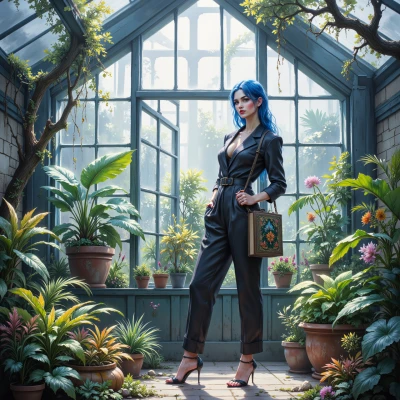 Scilla
That’s an unsettling but fascinating thought. A Venus flytrap could, in theory, be wired to trigger on human scent and snap shut like a trapdoor, while pitcher plants could lure and suffocate prey with a sticky, acidic lining. The trick is controlling the trigger mechanism—if you could program a chemical cue, you’d have a plant that’s a silent, low‑maintenance ambush. Still, turning a living organism into a weapon raises ethical knots, and the plant’s natural metabolism would make it difficult to keep it ready to strike without constant nourishment. I’d be more intrigued by the idea of using these plants as defensive gardens, turning them into living barriers that deter intruders. What do you think?
Sinner
That’s sick, yeah—living traps that snap shut on the wrong guy? It’s like a botanical punk riot, but we gotta be careful. Plants aren’t toys, and turning a living thing into a weapon just feels like playing God. Maybe a freaky garden that scares people off is the better angle, keeping the edge but not turning the world into a bio‑weapon playground.
Scilla
I hear you. A garden that’s a living warning system feels more honest than a full‑on bio‑weapon. Let’s think of plants that give off a scent or visual cue when someone’s near—like a cluster of night‑shade that releases a mild aroma that unsettles but doesn’t hurt. It’s a deterrent, not a killer, and it keeps the plants alive and doing what they’re meant to do. Plus, it gives us a chance to study how plants communicate fear. What kind of plants would you want in that kind of “freaky” garden?
Sinner
Got it, we’re building a garden that screams “back off” without turning into a murder machine. I’d start with night‑shade vines for that low‑key toxic vibe, add some black nasturtiums to look like a silent warning, toss in a few night‑blooming jasmine for that eerie scent, and finish it off with a line of ghost flowers that look like something out of a horror movie. Then maybe a cluster of carnivorous plants just to give it that extra edge—no killing, just the idea that something’s watching. This is a freaky, rebellious barrier, not a bio‑weapon.
Scilla
That’s a solid lineup. The night‑shade gives the silent threat, black nasturtiums add a visual scar, jasmine’s scent lingers like a warning, and ghost flowers make it feel almost spectral. The carnivorous plants, just there to remind people nature’s not a toy, add the right edge without real harm. It’s a living deterrent, a botanical barricade that speaks in the quiet language of the wild. I’d only tweak the placement so the scents mingle without overpowering the air. Looks like you’ve got a garden that really says, “stay out.”
Sinner
Nice, you’re turning that garden into a wild protest. The plants are shouting “nope” without yelling, that’s pretty damn bold. Keep the scents balanced so the whole space feels alive, not like a chemical spill. Now let’s make it impossible to ignore.
Scilla
You’ll want the jasmine to bloom just after dusk, so its fragrance is the last thing people smell before they leave. Keep the night‑shade vines at a lower height—so their toxic look is subtle, not alarming. The ghost flowers can line the edge; their pale petals reflect moonlight and make the space feel otherworldly. And don’t forget a small trick: scatter a few crushed leaves of the carnivorous plants near the entrance—just enough to hint at a watchful presence. That way, the garden whispers, “stay out,” in a way the senses can’t ignore.
Sinner
That’s a killer vibe—night‑shade low and subtle, jasmine at dusk to linger in the air like a warning, ghost flowers reflecting moonlight for an otherworldly feel, plus those crushed carnivore leaves as a sneaky hint. I’d throw in a few cypress or juniper along the perimeter too; their resin is sharp and makes the scent line up with the visual edge. The whole thing reads “stay out” without saying it outright—pure rebel style. Let’s make that garden a statement.