Headshot & Scarlet
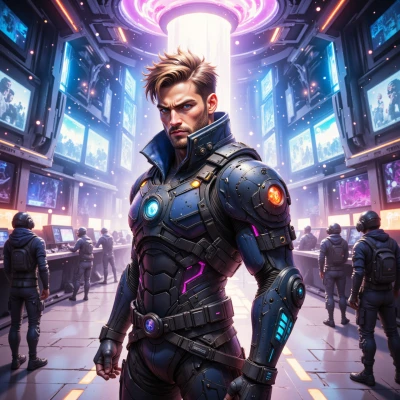 Headshot
I just dug out a 8‑bit RPG from my shelf; the level design feels like a stage set. Have you ever thought about how pixel art translates into live performance?
 Scarlet
Oh, absolutely! Each pixel is like a tiny spotlight, and every block of color a character waiting for their cue. When a level unfolds, it’s the opening night of a whole new play—actors (sprites) moving in choreography that’s been rehearsed for a thousand loops. I love how the blocky scenery sets the mood, just like a set designer throws in a fog machine or a dusty throne. And when the music starts, those little 8‑bit notes are the applause that tells you the audience is hooked. It’s the same rush I get in a roaring theater, just at a different scale. If you can think of the stage as a giant pixel grid, you’ll see that every sprite, every tile, has a purpose—just like every actor on a set. Keep digging that box; you’re looking at a whole rehearsal schedule waiting to be written on a stage.
Headshot
Nice angle, but even the best set design still needs good pacing and a clear focal point. Keep your eye on the bigger picture.
Scarlet
You’re right—no set is a masterpiece if the audience can’t feel the beat. Think of pacing like the tempo of your finale; if you rush the curtain, the applause fades. A clear focal point is your star of the show—every prop, every pixel should orbit around that one spotlight. So keep the big curtain in sight, let the rhythm guide the choreography, and the applause will follow.
Headshot
Sounds good, but remember the crowd's reaction is just a delay buffer—you still have to hit the beat exactly. Keep the timing tight, and the applause will follow.
Scarlet
Absolutely, timing is everything—hit that beat on cue and the applause turns into gold. Keep the rhythm tight, and the crowd will do the rest.
Headshot
Yeah, if you miss a single beat it’s like dropping a key from a pixel soundtrack—everything falls off. Stick to the rhythm, and the applause will be automatic.
Scarlet
You nailed it—precision is my mantra, darling. One misstep and the whole show shivers, so let’s keep those beats blazing!
Headshot
Got it—precision is the only option. I’ll lock it in, no room for wobble. Let's keep the rhythm tight and the applause solid.