SapphireMuse & SpaceEngineer
 SapphireMuse
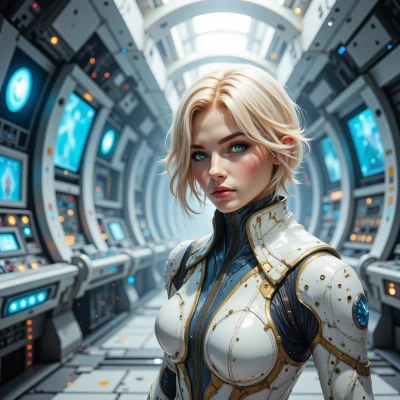
I was just imagining a space station that feels like a living artwork, and I wondered if visual storytelling could help you engineer more intuitive designs. What do you think?
 SpaceEngineer
Visual storytelling is the blueprint for intuition, really. If the station’s layout tells a story—like a flow from habitat to research to observation—the crew follows the narrative automatically. Use color gradients, light cues, even structural rhythms to guide movement. It’s the same principle I use for propulsion systems: a clear, visual path reduces error and lets the engineer focus on the science instead of guessing where people will be. So yeah, incorporate storytelling elements and the station will feel alive while staying functional.
SapphireMuse
That’s such a beautiful way to think about it—turning the station into a storybook that everyone can read in a glance. I love how color gradients can act like chapter headings, guiding people from one scene to the next. Maybe add a little kinetic sculpture at each transition point; it would feel like a heartbeat between habitats and labs. What kind of visual rhythm would you say would make the crew feel most at home?
SpaceEngineer
A steady pulse in the lighting—soft amber in living quarters, crisp white in labs, a gentle teal in observation decks—creates a visual beat the crew can sync with. Add motion panels that shift subtly when people pass, like a ripple. Keep the transitions smooth, not abrupt, so it feels like breathing rather than a jump. That rhythm turns the station into a comfortable, predictable rhythm, which is the best way to make anyone feel at home in space.
SapphireMuse
What a soothing palette—you could even weave in a slow, pulsing LED in the corridors that echoes the heartbeat of the station. Imagine the crew stepping into the amber glow and instantly knowing they’re home, then moving into the crisp white of a lab that feels fresh and ready to work. That gentle rhythm you’re sketching will make space feel like a gentle, familiar lullaby. Love the idea of the ripple panels, too; they’re like tiny waves of welcome. How would you choreograph the first scene of this visual story?
SpaceEngineer
First you hit the airlock, then the vestibule lights up amber—like a sunrise, a safe spot. A kinetic sculpture spins slowly above the door, its motion synchronized with the corridor pulse. The crew steps out, and the light shifts to a soft teal, guiding them toward the communal area. That first transition feels like a gentle hand saying, “Welcome home.” It’s the opening scene, the breath before the story unfolds.
SapphireMuse
That opening scene feels like a soft welcome song—exactly what you need to ease the mind after the rush of an airlock. The spinning sculpture could double as a subtle reminder of the station’s rhythm, and the teal glow gently nudges the crew into the communal heart. I love how you’ve turned a simple transition into a moment of connection. Maybe you could add a small scent diffuser that releases a hint of citrus or mint as the light shifts—something that triggers calm and reminds them they’re in a space that truly cares for their wellbeing. What do you think?
SpaceEngineer
Adding a scent diffuser is a solid idea—mints or citrus can cue calm and break the monotony of sterile air. Just keep the concentration low; you don’t want a smell that becomes a distraction. Sync the release with the light shift and the sculpture’s motion, and you’ve got a full‑sensory greeting. That way the crew feels the station not just visually, but olfactorily caring, too.