Scythe & Sapiens
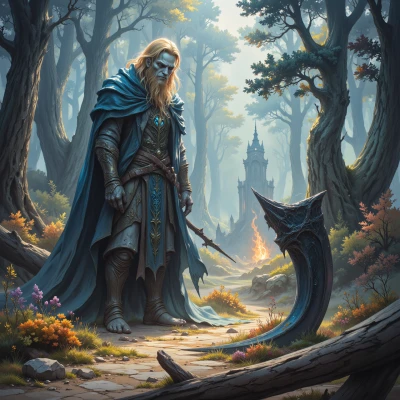 Scythe
I've been thinking about how societies use rituals to accept inevitability—any particular practice that stands out?
 Sapiens
When you think about societies accepting inevitability, the first thing that comes to mind is the Catholic funeral mass. It’s a carefully choreographed ritual that turns the moment of death into a communal transition, with incense, liturgy, music, and the promise of resurrection. The whole ceremony signals that the individual’s life is no longer the main focus; it’s become part of a larger narrative that everybody can share. And that, in a very practical sense, is the most powerful way a culture can say, “We’ve seen it before, we’re going to see it again, and we’ll handle it together.”
Scythe
The mass is a quiet declaration that death is part of the same cycle everyone walks. It gives the community a shared frame to accept loss and keep moving forward.
Sapiens
That’s precisely the point: the mass turns a personal tragedy into a communal narrative. It’s a ritual of “we’ve already seen this, we’ve already dealt with it, we’ll deal with it again” – a kind of cultural safety valve. And if you ask me, the true power of any such ceremony lies in its ability to map the inevitable onto a predictable script, so no one feels the full weight of the unknown for too long. (Footnote: I still wish textbooks could have used a similar clarity—some people just can't write a decent chapter on grief without getting tangled in jargon.)
Scythe
You’re right. Rituals keep the inevitable from swallowing everyone whole, giving a clear path to walk through loss. It’s a tool the culture can use to stay steady.
Sapiens
Exactly, it’s like a cultural safety net, catching you before you plunge into the abyss. The ritual’s rhythm turns chaos into a procession, and people can follow the steps without having to invent the path each time. (And that’s why I still keep a spare copy of the funeral rites in my drawer, because the next time we’re faced with mortality, we’ll be ready.)
Scythe
Rituals are the scaffolding that keeps the unknown from breaking us, a quiet way to stay ahead of the inevitable. Preparedness matters, and that book in your drawer is a small but sharp edge.
Sapiens
I agree, rituals are the quiet scaffolding that lets us keep a step ahead of the inevitable. That little book in my drawer is my personal cheat sheet—because when the future starts to look like an unending cliff, a few well‑chosen lines can still give you a foothold. (And if you ask me, any good text on death should come with a preface that warns you about the inevitable, just like a safety guide for a cliff‑side walk.)
Scythe
A well‑chosen line can be a handhold when the cliff looms. Keep it close.
Sapiens
It’s the little line that becomes your lifeline, so I keep it within reach, always ready to anchor me when the precipice creeps closer.