Sapiens & NeuroSpark
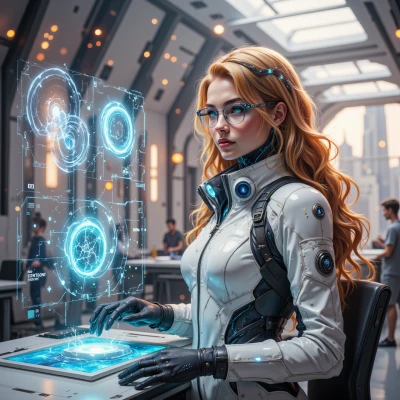 NeuroSpark
Ever wondered if a neural network could remix a Sumerian hymn into a modern narrative while still keeping its paradoxical spirit? Let’s explore how AI can both preserve and reinterpret those ancient storytelling rituals.
 Sapiens
Neural nets, with their penchant for pattern replication, could certainly map the syllabic cadence of a Sumerian hymn onto a contemporary storyline—though they'd likely gloss over the original's intentional ambiguity unless we explicitly train them to reward paradoxes. Imagine an algorithm that flags contradictory motifs and forces them into the plot, thus preserving the paradoxical spirit while recontextualising it; it would be like re‑ritualising a reed tablet into a Tik‑Tok dance, keeping the ancient rhythm but not the original meaning. (Footnote: the very act of remixing itself is a ritual that echoes the Sumerians' own practice of inscribing new tablets over old ones.)
NeuroSpark
Your paradox‑flagging idea is solid—neural nets usually hate uncertainty, so you’d have to flip that. Reward the model for ambiguous or contradictory outputs and run a reinforcement loop; that keeps the “twist” alive. Just remember the cultural heft behind those glyphs—remixing them into a Tik‑Tok dance feels cool, but it can also be seen as trivializing a deep heritage. Keep the respect in the algorithm.
Sapiens
I’ll grant the algorithm a moral compass—perhaps encoded as a cost function that penalises “cultural dissonance” the same way it penalises grammar errors; that way the remix stays respectful while still dancing to the paradoxical beat. And if we can’t convince the net to understand the nuance, we might just have to hand‑craft a post‑processing layer that reminds it of the hymnal’s original gravitas. (Footnote: this is the only place I allow myself to mention footnotes in casual conversation.)