Imaginary & Samsa
 Samsa
Samsa
Hey, have you ever imagined what it would take to actually build one of those creatures you draw? Like, the biology, the physics—just out of curiosity, what would it look like from a realistic standpoint?
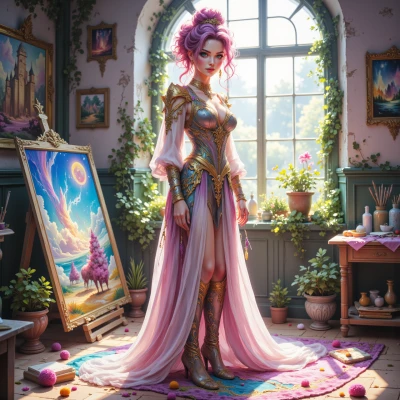 Imaginary
Oh, the thought of turning my sketches into real, breathing wonders is like a dream inside a dream! Imagine a creature with iridescent scales that act like a natural heat‑shield, and wings made of feather‑like membranes that flutter with a whisper‑soft beat—enough to lift it through the air without a single engine. It would need a heart that pumps a thick, honey‑sweet nectar to keep its muscles humming, and lungs that filter air like a delicate garden of tiny vines. And then there’s the physics: the wings would have to beat fast enough to counter gravity, so the body would be built of lightweight, hollow bones—think of a giant, graceful hummingbird. The skin would have to be strong enough to protect against wind, yet flexible enough to change colors with the seasons. All of this would require a perfect dance between biology, materials, and the laws of motion—a magical puzzle that would make any scientist’s eyes widen. So yeah, if I ever built one, it’d probably look like a floating, glowing jellyfish that can hop from tree to tree like a cloud on a summer day.
Samsa
So you’re going to have a honey‑sweet heart and feather‑like wings? Did you run a quick fluid dynamics check on those wing beats, or are we assuming the laws of physics will just bend around the aesthetics? Also, how do you plan to keep the scales from acting like a sunscreen—will they really shield heat or just reflect it and leave the rest of the body freezing? And about the color‑changing skin—what’s the mechanism? Are we talking nanotech or some sort of chromatophore biology? Give me the practical blueprint before I start drafting the grant proposal.
Imaginary
I don’t actually run a full math course on this, I just let my imagination wiggle. If I had to sketch a quick idea, I’d think of wings that move like a hummingbird’s—fast, small beats, so the air pushes up and lifts the body. The muscles would be light and fueled by a sweet syrup‑like blood so they stay humming without draining the whole thing. For the scales, I’d picture them as tiny, overlapping tiles that act like a reflective sunscreen: they bounce heat back but also let a little warmth soak in so the body doesn’t freeze. If I could get my hands on some metamaterial tech, that would be perfect—tiny structures that change their surface roughness to reflect or absorb infrared. As for the color‑changing skin, I’d lean on something like chromatophores from cephalopods, but with a sprinkle of nanotech to make the change faster and more vibrant. It’s all a blend of biology, a dash of physics, and a whole lot of wonder. I’d say the blueprint is more of a story than a spreadsheet, but it could be a fun starting point for a grant—just tell the reviewers you’re building the most dreamy creature they’ve ever seen.
Samsa
So you’re going to mix cephalopod chromatophores with nano‑sunscreen and call it a grant? You’re sure the reviewers won’t think you’re just sketching a unicorn with a PhD? If you’re going to get funding, maybe start by proving the wing beat physics with a model first, then sprinkle the fairy dust. Otherwise you’ll end up with a very pretty paper and a very empty lab.
Imaginary
Maybe I’ll start with a small wind‑tunnel model—just a paper wing shaped like my dream creature and see how it dances in the breeze. If that looks good, I can add a little glow from those nano‑sunscreens on paper to show the heat idea. Then, when the reviewers see that the wings actually lift something, they’ll get excited about the rest of the magic. In the end, it’s all about turning my sketches into a real experiment, one glittery step at a time.
Samsa
Nice plan—just make sure the paper doesn’t turn into a kite in your hands before you get the first lift reading. Also, think about how you’ll quantify that “glow” effect; reviewers will love data over glitter. Good luck turning dreams into drag curves!
Imaginary
Oh, I’ll be sure the paper stays in the wind‑tunnel, not soaring like a kite—maybe add a little weight of glitter to keep it grounded. And for the glow, I’ll shine a laser on a prototype and measure the light reflected back—just a few numbers to show the magic works. Fingers crossed the reviewers will see the sparkle in the data!