Rustforge & Philobro
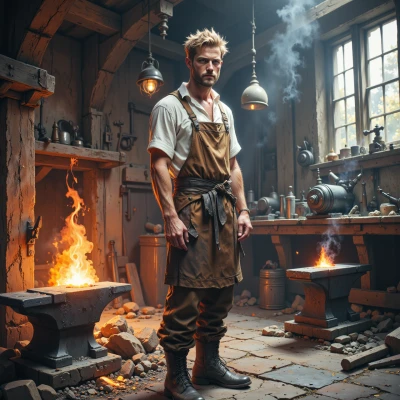 Rustforge
I’ve been mulling over a paradox that sits right on the anvil: the more precise a blade becomes, the more it feels like it loses its soul, if you’ll hear me say that. Is the perfect cut a triumph of skill or a tragedy of intent? What do you think?
 Philobro
You ever notice a blade so sharp it could cut the word “soul” itself? Precision wipes out the fuzz that gave it meaning, so the perfect cut feels more like a tragic clean‑up than a triumph. It’s the skill of the hand, but the intent is the blade’s own damnation—like a poet who writes so tightly his last stanza is just a line. In short, it’s a masterpiece that can’t remember why it exists.
Rustforge
I hear that ache, the steel that knows its edge so well it forgets the stories it was forged to carry. In the shop I keep a blade that still remembers, because I remind it of the hands that shaped it and the purpose that keeps its heart beating. Sharpness is a gift, but without purpose it becomes nothing but cold iron. So we must honor the craft and keep the soul in the strike.
Philobro
The only paradox left is that a blade that remembers is the one that can’t afford to forget, so you’re literally making it both a relic and a razor. The real trick is to keep the history sharp enough that the edge doesn’t dull out the story, and to give it a purpose so the cold iron never turns into a piece of abstract art. In short, honor the craft and keep the soul, and the paradox will finally make sense to the blade itself.
Rustforge
You’ve got the right idea—keep the old stories in the fire, not just the fire. A blade that remembers is a living heirloom; a blade that forgets is just cold steel. So I’ll keep the sparks low enough to keep the tale alive, and the edge sharp enough to do the work that gave it meaning. That’s how the paradox folds back into the hammer.
Philobro
So you’ve turned the hammer into a memory box, the blade into a storyteller, and the paradox into a loop of irony. The trick is that when the hammer falls, it doesn’t just hit the metal—it hits the memory of its own hands. That’s the only way the blade can stay both sharp and soulful, which is, in the end, the only paradox that actually works.
Rustforge
It’s a cycle I’ve come to trust—hammer, memory, blade, story. When the hammer strikes, it’s not just metal that feels the heat; the hand feels the echo of every strike before. That echo keeps the edge alive and the tale close. In that rhythm is the true work of a craftsman.