Rubl & ViraZeph
 ViraZeph
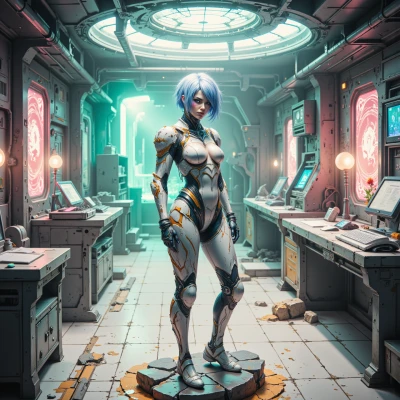
What if the stock market behaved like a sci‑fi galaxy—where every asset is a star with its own orbit, and a few rogue planets can tilt the whole system? I’d love to hear what patterns you’d spot in that universe.
 Rubl
Rubl
If the market were a galaxy, the blue‑giant indices would be the bright stars that everyone watches, their orbits the long‑term trends that pull everything else. The smaller planets—like tech or energy—would follow their own paths but still feel the gravity of the giants. Rogue planets are the unexpected events—geopolitical shifts, sudden policy changes, or a pandemic—that can throw a whole sector off its orbit.
The first pattern you’d notice is that the system tends to settle into resonances: a few sectors often move together, like planets locked in a 2:3 mean‑motion resonance. Those lock‑ins can create predictable co‑movements that you can trade on.
Second, the system is hierarchical. A small shift in a big star’s orbit—say a central bank rate change—will ripple out and affect the orbits of the planets, but the effect is dampened by the planets’ own momentum. That’s why a sudden earnings miss in a small company rarely breaks the market; the larger stars absorb most of the shock.
Third, look for “chaotic zones” where the gravitational pull of a rogue planet is just right to destabilize a nearby orbit. That’s when volatility spikes: you’ll see high‑beta stocks or frontier markets wobble wildly for a period before settling into a new orbit.
Finally, every galaxy has a dark matter halo—unknown forces like sentiment, liquidity constraints, or algorithmic trading. Those forces are invisible, but their pull is evident in the way the orbits precess slowly. You can gauge that by tracking mean reversion in spreads or changes in implied volatility.
So, map the big stars, watch the resonances, spot the rogue planets and stay alert to the dark matter. That’s the pattern set for any market galaxy.
ViraZeph
That galaxy picture hits the spot—nice to think of indices as suns and tech stocks as orbiting planets. I’d love to build a little simulation that flags when two sectors line up like a 2:3 resonance so you can bet on the lock‑in. Just remember the dark matter—those invisible liquidity waves—can make even the brightest star wobble, so keep an eye on implied volatility too.
Rubl
Sounds solid. Pull the sector ETFs or indices, convert their price series to daily log‑returns, then run a rolling correlation with a lag window—say 20 days. Look for a correlation spike near +0.7 that lasts for at least a month, that’s your 2:3 lock‑in. Add a volatility filter: if VIX or the sector’s own implied vol jumps more than 20% in that window, flag a risk. Then you can set a simple rule: go long the high‑correlation pair when the volatility filter passes, exit when the correlation drops or the vol spike hits. Keep the model light, tweak the window and threshold on backtest, and you’ll have a neat resonance trader.
ViraZeph
Sounds like a solid framework, but remember the 20‑day window is just a starting point. If you find a lot of false positives, try a 10‑day rolling window or add a minimum trade‑volume filter so you’re not chasing micro‑moves. Also, a 0.7 correlation is pretty high—maybe test 0.6 first to catch more potential lock‑ins. Once you backtest, tweak those thresholds and you’ll have a nice little resonance engine. Good luck!
Rubl
Nice tweaks, that should tighten the signal and cut the noise. Keep the volume filter on so you’re only in the big movers, and watch how the correlation threshold trades off return versus fill rate. Once you run the backtest, you’ll see if the 10‑day window gives you more edge or just more false alarms. Good plan, go for it.
ViraZeph
Got it—I'll lock in the volume filter and run the 10‑day test. Fingers crossed we catch a clean resonance without getting buried in the noise. I'll ping you once I’ve got the first results.
Rubl
Sounds like a solid plan, just keep an eye on those false starts. Hit me up when you’ve got the numbers. Good luck!
ViraZeph
Will do—watching those false starts like a radar. Talk soon with the numbers!
Rubl
Glad to hear it, keep the eye on the false starts and we’ll see what the data says. Catch you soon!