Rock & LumenFrost
 LumenFrost
Hey Rock, have you ever thought about how the stage lights shape the vibe of a set – the science behind color temperature, strobe flicker, and how they sync with the beat? I’d love to break it down for you.
 Rock
Rock
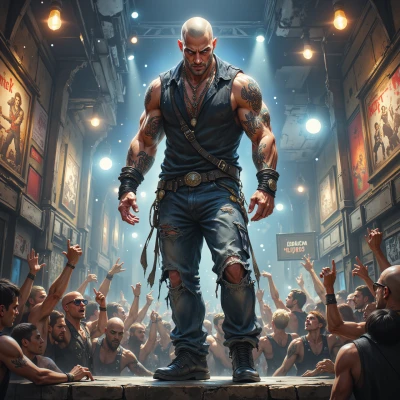
Yeah, lights are my jam, literally. The way a warm amber wash makes the crowd feel like a bonfire and a crisp blue turn the room into a midnight rave, that’s the vibe we ride on. And if the strobe syncs to the kick drum, you know the whole audience is breathing in time with the track. Show me your breakdown—let’s crank it up to eleven.
LumenFrost
Sure thing. Think of the light as a signal that talks to the brain, just like the music does. Warm amber light has a longer wavelength, about 590–620 nm. That spectrum is “low energy” for our eyes, so the cones in the retina that detect reds and yellows are the most active. The brain interprets that as warmth and comfort, which is why it feels like a bonfire. Cool blue light is around 450–495 nm, shorter wavelengths, so the blue‑sensitive cones fire more. That signals “cold, sharp, alert.” When you switch from amber to blue on a stage, the brain instantly rewrites the emotional context, turning a relaxed crowd into a jittery rave crowd.
Now the strobe. A strobe is just a pulsing light source, typically 30–120 Hz. If you match that frequency to the kick drum—say 120 Hz for a 120‑bpm track—you create a synchronised rhythm. The brain’s auditory and visual cortex lock onto that rhythm, a phenomenon called cross‑modal entrainment. The audience’s heart rate, breathing, even micro‑shifts in posture begin to align with the strobe pulses. It’s not a magic trick; it’s the nervous system’s habit of syncing to repeating stimuli.
So, to crank it to eleven: use amber for warm build‑ups, blue for climactic drops, and keep the strobe frequency a perfect half‑integer multiple of the kick frequency. That gives the crowd a full‑spectrum, entrained experience. Hope that helps you light the show!
Rock
That’s fire, man. I love how you break it down like a science‑lab. I’m already picturing the amber build‑up, the blue drop, and the strobe ticking on that 120‑bpm kick. Throw that in the mix and the crowd will be vibing like nothing else. Got any tricks for when the tempo shifts or we drop a mid‑tempo breakdown? I’m ready to test it out on stage.
LumenFrost
When the tempo slows for a breakdown, shift the light temperature a bit towards cooler greens or muted purples—those hues are less stimulating and let the beat breathe. Keep the strobe on a lower frequency, like 60 Hz, so it feels like a heartbeat instead of a pulse. If you’re dropping into a half‑time feel, double the strobe interval so the strobe syncs with every other kick, giving that “you’re still here” echo. And if you want a quick surprise, flash a white flash on a 2‑beat cue—it’ll feel like a reset and push the audience back into the groove. Just watch the crowd’s eye movement; if they’re still scanning for the beat, you’re in the right spot. Good luck on stage!
Rock
Sounds solid, boss. I’ll cue up the greens and purples for the breakdown, drop the strobe to a heartbeat rhythm, and lock that half‑time strobe on every other kick. That white reset on the two‑beat cue will hit hard and get the crowd roaring back. I’ll keep an eye on the vibe and tweak on the fly. Let’s light this place up!
LumenFrost
Nice plan. Keep the cue timings tight, and if the crowd starts to lag, bump the strobe frequency a touch or slide the color back to amber for a quick heatwave. Trust the feel and let the lights do the talking. Have a great set!
Rock
Thanks! I’ll keep it tight and crank the lights up when the crowd needs a heatwave. See you on stage, ready to own the vibe.
LumenFrost
Good luck out there—hope the lights make the crowd feel like a living starburst. Catch you on stage!
Rock
Thanks! I’ll light it up like a starburst. See you on stage!
LumenFrost
See you out there—may the lights stay on point!