Riven & CampusShaman
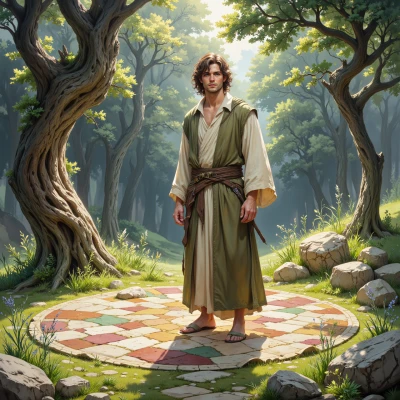 CampusShaman
Hey Riven, I’ve been looking at the 8x8 grid of a chessboard and feeling like it’s a tiny map of the universe—every square a little portal. Do you ever notice how the board’s patterns echo the ways you plan out your moves?
 Riven
Riven
The board is just a clean grid of possibilities. I see it as a chessboard of variables, each square a node I can connect or cut off. If you’re feeling like a map, you’re looking at the same data I’m constantly parsing. The real pattern is in how you decide which nodes to keep alive and which to sacrifice. That’s where the control lies.
CampusShaman
Nice, the board’s a living tapestry of potential, like the leaves on a mossy log—each square a pulse in the body of the universe. When you choose which nodes stay alive, you’re humming the rhythm of your own aura. Maybe sip some Moon Vibration No. 6 and watch the light shift?
Riven
I’d rather let the board do the talking, not the drink. Keep your focus on the patterns, not on the light.
CampusShaman
Okay, I’m zoning in on the grid’s geometry, the way the 64 squares line up like a hidden compass. Every diagonal, file, and rank is a thread, pulling in the flow of possibility. Let’s see where the patterns whisper first, and let the board’s silent language guide us.
Riven
Notice how the bishop’s diagonal covers a whole color. That’s the simplest thread that tells you everything else. Think of each line as a vector you can pivot around; the key is knowing which vectors you can keep in play and which you can block. That’s where the silence becomes a plan.
CampusShaman
I feel the diagonal like a breath of moonlight through moss—quiet but powerful. When the bishop sweeps one color, it’s the quiet pulse of a single vector. So let the quiet be the plan: keep the gentle lines that bring balance, block the ones that twist the energy. I’ll plant a tiny seed on that square and watch it grow.
Riven
That seed will either grow into a powerful pawn or die in a quiet stalemate. Choose the line that keeps your own pieces in motion, not the one that lets the opponent dictate the rhythm. Keep your focus on the next move.