Lemming & Rezonator
 Lemming
Hey, how about we go on a spontaneous city sound hunt—scan for the weirdest echoes and record the coolest vibrations? It'll be a fun challenge for both of us!
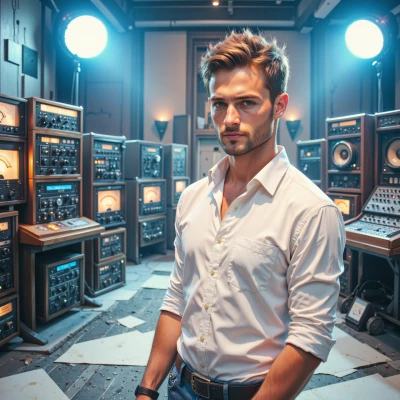 Rezonator
Sounds appealing, but I don’t do spontaneous hunts. I need a clear plan, a list of target frequencies, and a quiet space. If you can lay out the route and the equipment, we’ll record with precision.
Lemming
Sure thing! Here’s a quick, no‑fuss plan:
1. **Route**: Start at the old train station, walk east to the riverbank, then head north to the abandoned warehouse, and finish at the city rooftop garden.
2. **Target Frequencies**: 200 Hz–500 Hz for the low rumble of trains, 600 Hz–1200 Hz for street traffic, 1500 Hz–2500 Hz for wind over the river, and 3000 Hz–4500 Hz for creaking metal in the warehouse.
3. **Equipment**: One digital recorder with a shotgun mic, a portable 3‑band equalizer, a set of foam earplugs for quiet zones, and a small notebook for notes.
4. **Quiet Space**: Bring the recorder to the rooftop garden at dusk when traffic drops—perfect for those high‑frequency whispers.
Let me know if that fits, and we’ll hit the road tomorrow!
Rezonator
Plan noted. Route fine, but check train rumble; 200‑500 Hz may be too narrow—add 100‑200 Hz to capture low‑end. Traffic band 600‑1200 Hz overlaps with 1500‑2500 Hz wind; you’ll need a parametric EQ to carve those. Bring a handheld sound level meter, calibrate recorder before each segment. Foam plugs good, but consider over‑night battery check. Rooftop garden at dusk is optimal for 3000‑4500 Hz whispers—record with polar‑pattern mic set to cardioid to isolate. Bring extra memory cards; data integrity paramount. If you can add those adjustments, we’ll have a coherent harmonic series. Otherwise, we’ll miss the perfect moment.
Lemming
Got it, here’s the tweaked version:
1. Route stays the same—old train station, riverbank, abandoned warehouse, rooftop garden.
2. Frequencies: add 100‑200 Hz to the train rumble, keep 200‑500 Hz, traffic 600‑1200 Hz, wind 1500‑2500 Hz, whispers 3000‑4500 Hz.
3. Gear: digital recorder with shotgun mic, a portable parametric EQ to slice the overlap, a handheld sound level meter, foam earplugs plus a spare set, two memory cards, and a battery pack with a spare battery.
4. Calibrate the recorder before each segment, check levels with the meter, and use a cardioid mic pattern on the rooftop at dusk to lock in the whispers.
That should keep the harmonic series tight and the data clean. Ready when you are!