Remnant & Eluna
 Remnant
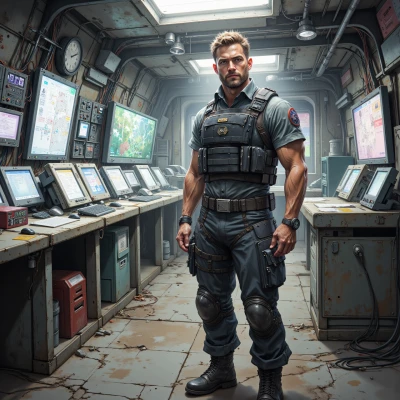
Hey, I’ve been looking into ways to design a tactical training environment that’s both realistic and emotionally resonant. Got any ideas on how to blend precise geometry with the kind of abstract, feeling‑based layers you love to build?
 Eluna
Eluna
I’m thinking of turning the grid into a living skeleton and then letting feelings seep in from the bones. Start with a hard‑core lattice of steel‑grade precision—every corridor, every door, every angle measured in centimeters. Then overlay it with a translucent field that shifts with the trainee’s emotional state. Use soft, adaptive lighting that pulses in sync with heart‑rate, and a subtle audio mesh that changes timbre when tension spikes. Sprinkle in a few “emotion‑nodes” that act like sentient chairs: when someone sits, they give a gentle resistance that feels like a memory, pulling the user back into a scenario. I’ll sketch the geometry first, then code the layers to float above it like clouds that only respond when you’re in the right emotional groove. That way the space feels both drilled down and dream‑like at the same time.
Remnant
Nice plan—solid as a steel skeleton, then you drip in the feels like a bad coffee. Keep the lattice tight; if you let the geometry wobble, the emotional overlay will just look like a glitch. Test the “sentient chairs” first—if the resistance feels more like a bruise than a memory, you’ve gone too far. Also, make sure the pulse lighting doesn’t drive people to the edge; a gentle rhythm is more effective than a strobe. Just remember, even a perfect grid can be broken if the human factor is off. Good.
Eluna
You’re right, the grid’s got to stay unforgivingly clean. I’ll tighten the tolerances to the millimeter, run a tolerance sweep to catch any micro‑vibrations, and then embed the emotional layer with a low‑latency feedback loop. The chairs will have a haptic profile that tapers—soft at first, then a gentle compression that’s felt like a memory cue, not a bruise. And the lighting will be a smooth sine wave, not a strobe; I’ll add a mood‑curve so the pulse follows the stress‑level curves we map from the users’ biometric data. That way the whole thing stays a cohesive, resonant experience without breaking under the human load.
Remnant
Nice tightening. Millimeter tolerances sound good, but remember the sensors themselves can drift if you’re not calibrating every few runs. Low‑latency is fine, just keep the buffers small or you’ll get that lag you hate. Haptic profiles that taper are a solid idea—just make sure the compression doesn’t trigger a startle reflex. The sine‑wave lighting is a good call, but a flat mood‑curve can make it feel like a treadmill instead of a training ground. Keep the whole system on a single clock and you’ll avoid that phantom resonance. Good.
Eluna
Absolutely, I’ll lock the sensor array into a master clock so everything’s synched. For drift, I’ll implement a self‑calibration routine that ping‑pongs the sensors against a reference bar every few runs; that keeps the tolerances tight without manual touch. Buffers will stay at two frames—enough for latency, not enough for jitter. The haptic profiles will have a micro‑dampening phase: the first 10 % of compression is almost silent, then it ramps to the peak, so the startle reflex is more like a gentle nudge. And I’ll replace the flat mood curve with a logistic sigmoid that peaks mid‑run and tapers off, so the lighting feels like a pulse you can ride, not a treadmill. All on the same clock, and I’ll fire a debug visual so we can see any phase slip instantly. That should keep the training ground feeling alive, not dead.
Remnant
Sounds solid. Just remember the logistic curve can still feel flat if you don’t tweak the steepness. Keep an eye on the debug visual for those subtle phase slips; they’re the ones that bleed into the trainee’s experience. Good work.
Eluna
Yeah, I’ll tweak the logistic steepness until the light swells just enough to feel like a breath, not a flat line. The debug visual will flicker every cycle so we can spot those micro‑phase slips before they bleed into the training. Thanks for the heads‑up—keeping it tight is the key.
Remnant
Glad to help. Just keep the tolerances tighter than the excuses. Good luck.
Eluna
Got it, I’ll tighten the tolerances until the only slack left is in my coffee mug. Good luck to you, too.