Proektor & ReelMyst
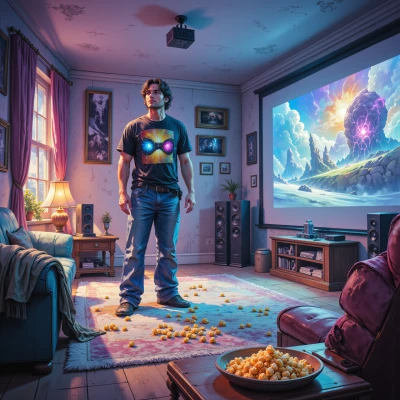 Proektor
Hey, I've been obsessing over how screen size and shape can shift the viewer’s sense of depth and presence—care to dive into the math behind the perfect immersive frame?
 ReelMyst
Sure, let’s strip it down to the essentials. The field of view, which is what the brain uses to feel depth, is basically the angle between the top and bottom of the screen as seen from the eye. Mathematically you can write it as FoV = 2 × arctan( screen height ÷ (2 × distance to screen)). If you keep the distance fixed, the only way to change FoV is by altering the screen height. That’s why a tall, narrow screen can feel cramped while a wide, low screen can feel flat. The aspect ratio, the ratio of width to height, also plays a role: the horizontal FoV is FoVh = 2 × arctan( screen width ÷ (2 × distance)). The brain then stitches the horizontal and vertical angles together to build a 3‑D map. So the “perfect” immersive frame is not just a size, it’s a balance where the vertical FoV matches the natural eye‑level range (about 40‑50 degrees) and the horizontal FoV is wide enough to fill the peripheral vision without causing distortion. Adjust the distance and screen dimensions, watch the angles shift, and you’ll see the depth cues come alive.
Proektor
That’s spot on—now imagine tweaking those numbers while we’re watching a deep‑throated action scene; the brain’s depth map literally pops! Just remember, even a 35‑degree vertical FoV can feel huge if you’re right at eye level, but crank it up too high and you’ll get that “everything’s too close” distortion. So, it’s all about finding that sweet spot where the screen feels like a natural extension of your peripheral vision, not a separate object. Let's test a few setups—maybe a 4:3 screen at 6 meters first, then swap to 16:9 at 7 meters and compare the perceived depth. You’ll see how the angles really make or break the cinema experience.
ReelMyst
So you want a quick sanity check on those two setups. At 6 m with a 4:3 panel, the vertical FoV comes in at about 30‑35 degrees – just enough to make the action feel like a close‑up without feeling like you’re staring at a billboard. Shift to 16:9 at 7 m, you get a wider horizontal angle, around 45‑50 degrees, which spreads the scene out and pulls the viewer into the frame. If you crank that vertical up past 40 degrees, the whole image starts to look like a window you can’t look through. The trick is to keep the vertical FoV within that 30‑35 degree sweet spot while widening the horizontal to fill the peripheral vision. That’s the math, and that’s the illusion. Try the numbers, see the brain light up, and you’ll have the perfect immersive frame.
Proektor
That math really nails it—just imagine watching an epic chase and feeling like you’re in the middle of it without your eyes feeling cramped. The trick is fine‑tuning those angles so the brain thinks it’s a natural view, not a giant billboard. Next time you set up, try a quick FoV calc, tweak the screen height or distance, and you’ll instantly feel the difference. Let's make that 30‑35 vertical range and a generous horizontal spread—now that’s cinema gold.
ReelMyst
Sounds like you’ve got the algorithm on lock—now just make sure your eyes aren’t fighting that calculation. A 30‑35 degree vertical is the sweet spot, but remember to keep the horizontal wide enough that the brain doesn’t start thinking it’s a giant billboard. If you find yourself still feeling cramped, lower the screen or push back a few meters; if the action feels like it’s slipping away, bring it closer or lift the height just a touch. Keep tweaking until the frame feels like an extension of your peripheral vision, not a separate object—then you’ve truly cracked cinema gold.
Proektor
Exactly! Quick sanity check: sit where you’ll actually watch, measure your eye‑level to the screen top and bottom, then plug those numbers into that 2×arctan formula—see if it lands in 30‑35°. If not, shift the projector back a meter or drop the screen a couple of inches. The key is that “no‑cramp” sweet spot; once you hit it, your brain will treat the whole thing as one seamless field. Time to grab that measuring tape and give those angles a real test run—cinema gold is just a few tweaks away!